 Special Mention for Ecological Transition and Environment
 Dhankuta
Nepal
Dhankuta
D) Ecological Transition and Environment
Special Mention for Ecological Transition and Environment
Participatory Watershed Governance in the Nibuwa–Tankhuwa Catchment website
https://covenantofmayors-southasia.eu/uploads/resources/2649C7AB-27A3-47B3-90A6-8F6EBC19FCAE.pdf
Dhankuta Municipality website
The practice on the ParticipateOIDP website
https://participate.oidp.net/processes/award2026/f/305/proposals/3720
Dhankuta Municipality is located in the mid-hills of eastern Nepal within the Koshi River Basin, an area characterised by steep terrain, fragile ecosystems and a high dependence on natural resources for water, agriculture and local livelihoods. Climate change has intensified seasonal water scarcity while increasing the frequency of landslides, soil erosion and extreme rainfall, creating simultaneous challenges of water shortages during dry periods and flooding during the monsoon season. These pressures have particularly affected women, indigenous communities and smallholder farmers, who rely directly on local water sources for household needs and agricultural production.
The practice Participatory Watershed Governance in the Nibuwa–Tankhuwa Catchment was launched in 2021 to strengthen water security and climate resilience through a participatory governance model centred on the watershed rather than on administrative boundaries. Building on research conducted between 2017 and 2020 by Dhankuta Municipality and the International Centre for Integrated Mountain Development (ICIMOD), the initiative sought to address the limitations of fragmented, sector-based approaches by integrating environmental management, local planning and citizen participation within a single governance framework.
The methodology begins with the recognition of the watershed as both an ecological and a governance unit. Instead of each municipality designing interventions in silo, the practice adopts a catchment-scale approach that brings together Dhankuta Municipality, neighbouring Chhathar Jorpati Rural Municipality and local stakeholders to jointly identify environmental challenges and coordinate responses across the entire watershed.
The participatory process started with community-level diagnosis of water, land and climate risks. Through participatory mapping, household surveys and focus group discussions, residents—including women, indigenous communities, farmers, youth and households experiencing water scarcity—identified priority concerns such as drying springs, land degradation, landslides and declining agricultural productivity. This diagnosis combined local knowledge with hydrological, ecological and socio-economic research carried out by ICIMOD, creating a shared evidence base for decision-making.
The information gathered informed a second phase of multi-stakeholder planning workshops, bringing together municipal officials, ward representatives, community organisations, technical experts, NGOs and local residents. Rather than consulting citizens on predefined projects, these deliberative forums jointly developed a watershed management plan organised around six complementary components: water conservation, sustainable land-use management, livelihood diversification, climate change adaptation and disaster risk reduction, institutional strengthening and interdisciplinary action research. The resulting priorities were incorporated into municipal planning and budgeting processes.
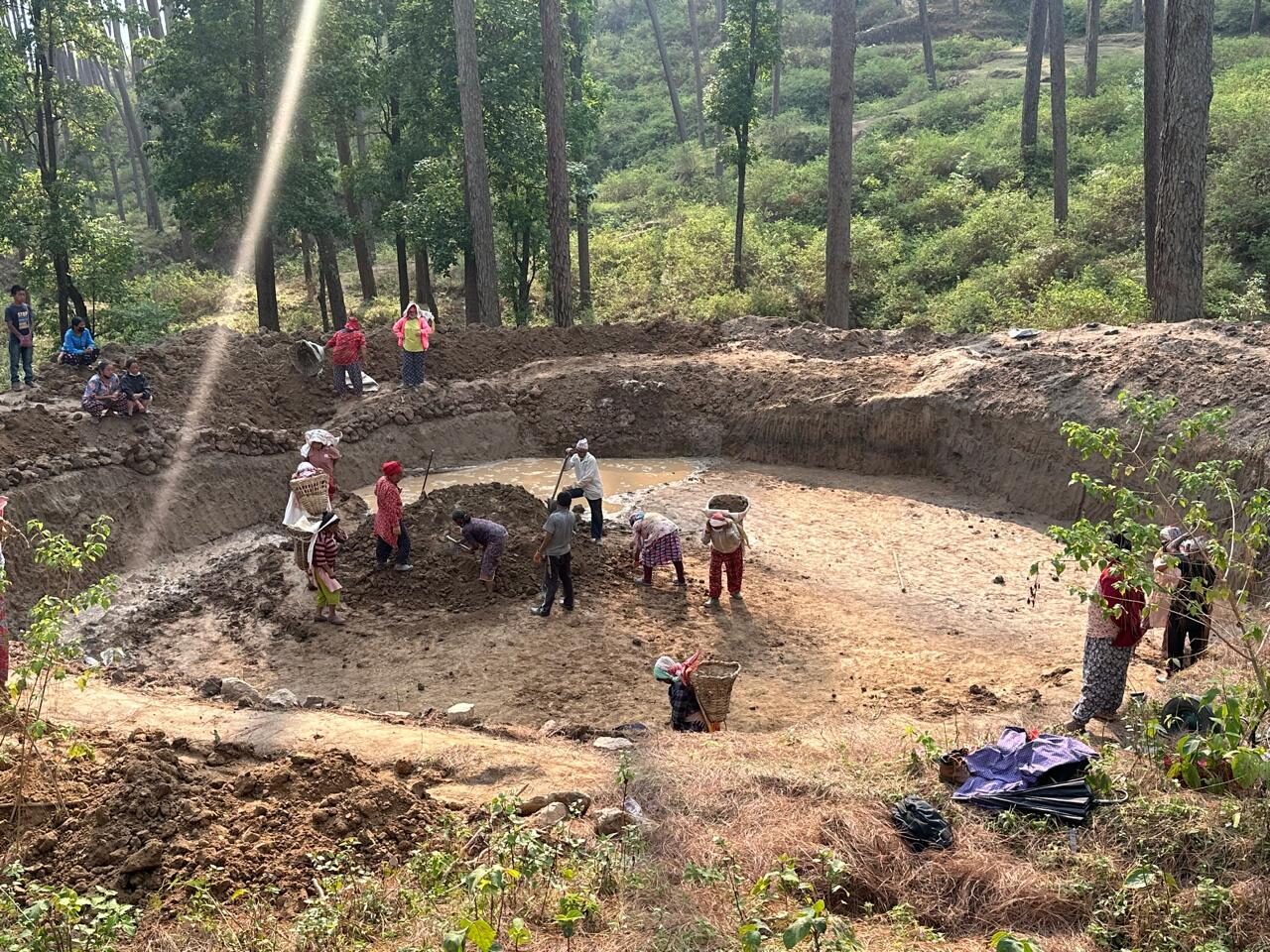
Implementation is carried out through watershed and spring-source management committees, which enable communities to remain directly involved beyond the planning stage. Citizens participate in identifying intervention sites, constructing recharge ponds, infiltration pits and bioengineering measures, restoring spring sources and monitoring environmental conditions. Municipal budgets are combined with inter-municipal cost-sharing arrangements and technical support from ICIMOD and partner organisations, while responsibilities for implementation are shared among local governments, community organisations and technical institutions.
A central innovation of the practice lies in the institutionalisation of participatory watershed governance within local government systems. Rather than treating watershed management as a series of isolated environmental projects, the initiative establishes the watershed itself as a permanent platform for citizen deliberation, inter-municipal coordination and public accountability. Scientific research and technical expertise are combined with indigenous and local knowledge, while citizen participation is embedded throughout planning, implementation, monitoring and policy development.
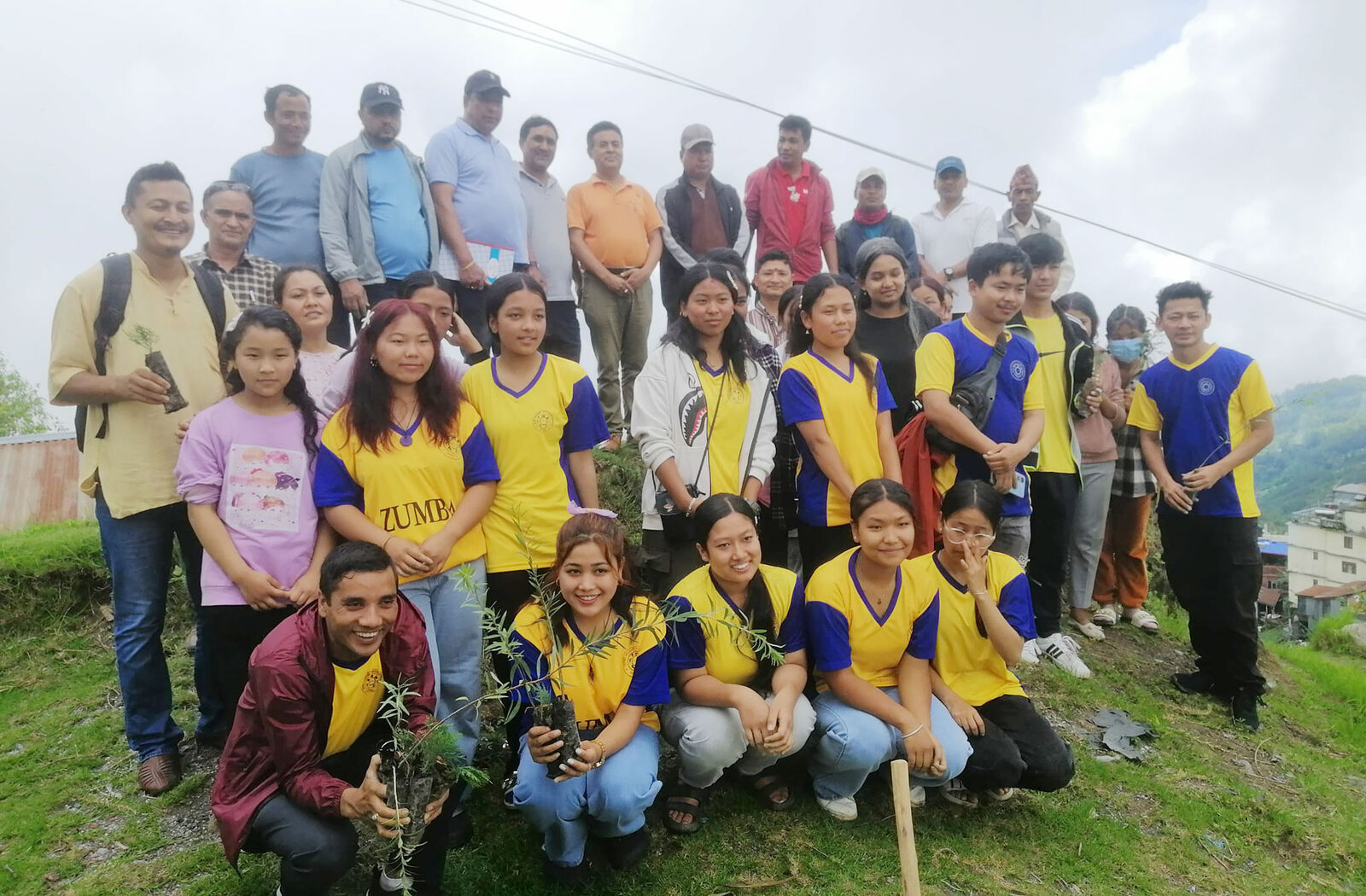
The practice also places strong emphasis on inclusion and equity. Women, indigenous communities, smallholder farmers and households most affected by water scarcity are actively involved through targeted consultations, representation within watershed committees and capacity-building activities. Flexible meeting schedules and participatory facilitation methods seek to reduce barriers to participation, ensuring that groups most directly affected by climate and water challenges contribute to defining priorities and monitoring implementation.
Monitoring and evaluation are integrated into the governance model through participatory review meetings, technical assessments and community-based monitoring of spring discharge, water infrastructure and environmental impacts. Citizens contribute directly to evaluating interventions and identifying adjustments, while implementation responsibilities and budget allocations are discussed openly during public forums, reinforcing transparency and accountability. Lessons learned are incorporated into subsequent planning cycles, allowing the practice to adapt to changing climatic conditions and local priorities.
The long-term sustainability of the initiative is supported through its integration into municipal planning and budgeting systems. Watershed committees continue to oversee interventions after implementation, while municipalities allocate annual resources for priority activities and maintain coordination with technical partners. This institutional integration enables the practice to evolve in response to community feedback, funding opportunities and emerging climate risks while maintaining its participatory governance framework.
According to the municipality, the practice has strengthened coordination between citizens and local governments, improved water security and reduced conflicts over water use. Communities now play an active role in the management of springs, landslide-prone areas and natural resources, while participatory watershed management has been incorporated into municipal development planning. By linking ecological restoration with collaborative governance, the initiative illustrates how participatory planning can strengthen environmental resilience while embedding citizen participation within local decision-making.











Jury comments
"The practice demonstrates how environmental governance can be strengthened by placing citizens at the centre of decision-making, transforming watershed management into a genuinely participatory process that extends from diagnosis and planning to implementation and monitoring."
"By treating the watershed as a shared ecological system rather than an administrative boundary, the initiative offers an innovative model of inter-municipal collaboration that combines scientific expertise, local knowledge, and community leadership to build long-term climate resilience."
"This is a compelling example of participatory environmental governance, distinguished by its strong methodology, inclusive engagement of vulnerable communities, and institutionalized mechanisms for collaboration, making it a valuable model for other territories facing water scarcity and climate-related challenges."
"A highly participatory approach that shows environmental resilience is strongest when built with communities rather than for them."