 Special Mention for Urban Management and Public Space
 Contagem
Brazil
Contagem
B) Urban Management and Public Space
Special Mention for Urban Management and Public Space
Program for the Improvement of Informal Settlements, Favelas and Peripheries website
https://decidim.contagem.mg.gov.br/processes/programa-de-melhoria-de-vilas-favelas-e-periferias?participatory_process_slug=programa-de-melhoria-de-vilas-favelas-e-periferias
Contagem Municipality website
https://portal.contagem.mg.gov.br/
The practice on the ParticipateOIDP website
https://participate.oidp.net/processes/award2026/f/305/proposals/3765
Contagem is located in the Metropolitan Region of Belo Horizonte, in the state of Minas Gerais, Brazil, and has a population of more than 620,000 inhabitants. As one of the state's main industrial and economic centres, the municipality combines significant economic dynamism with persistent territorial inequalities. Approximately 96,000 people—around 15% of the population—live in nearly 100 villages, informal settlements and peripheral neighbourhoods that have historically experienced limited access to urban infrastructure, including paving, drainage, sanitation, street lighting and public spaces. In response, the municipality launched the Programme for the Improvement of Informal Settlements, Favelas and Peripheries in 2024 to improve living conditions while strengthening citizen participation in urban planning and investment decisions.
The programme builds on Contagem's experience in participatory governance by placing community participation at the centre of the planning, prioritisation and monitoring of urban interventions. Rather than defining projects exclusively through technical planning, the municipality established a participatory process through which residents identify local priorities, contribute to the allocation of municipal resources and monitor the implementation of public works.
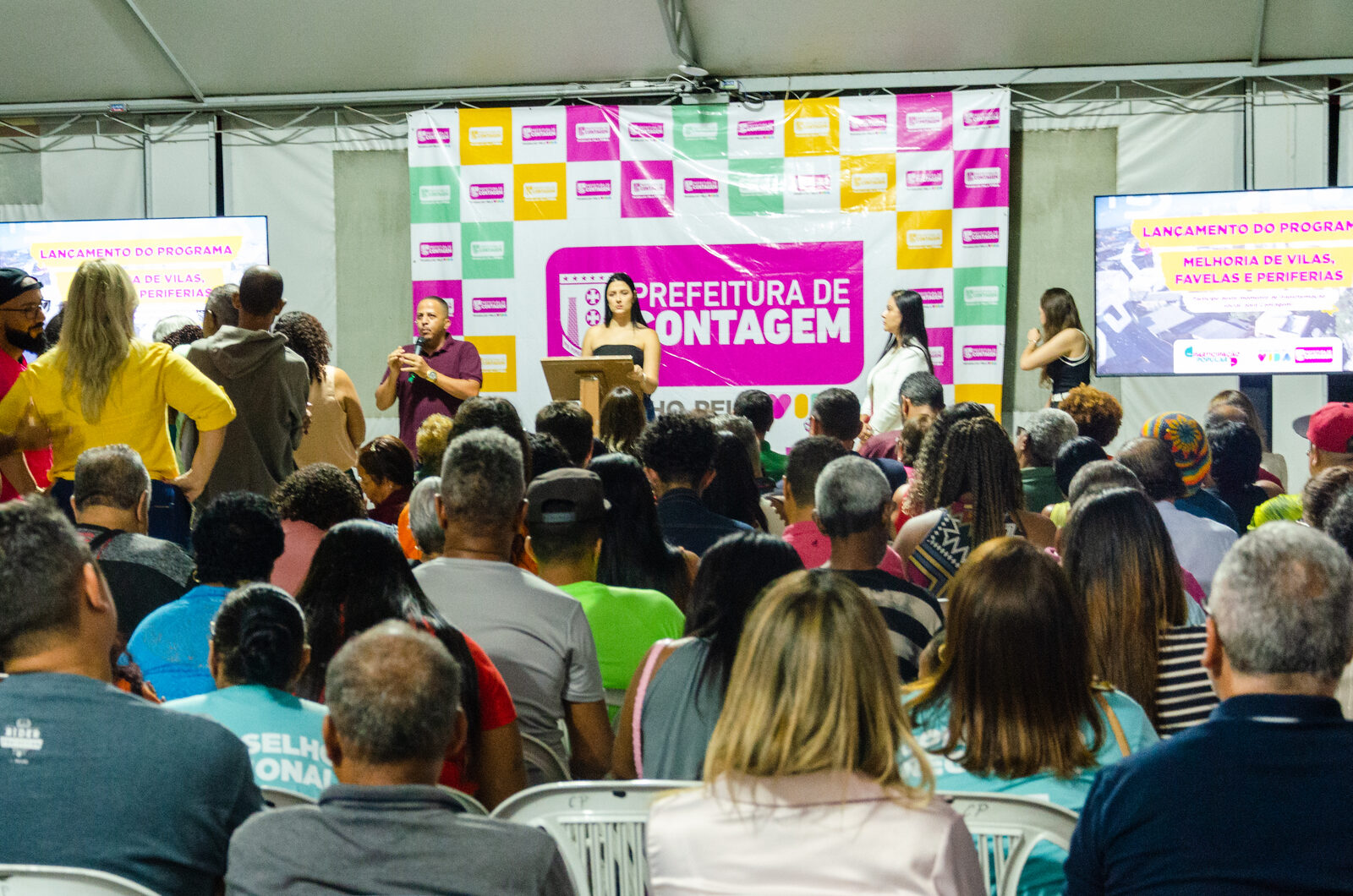
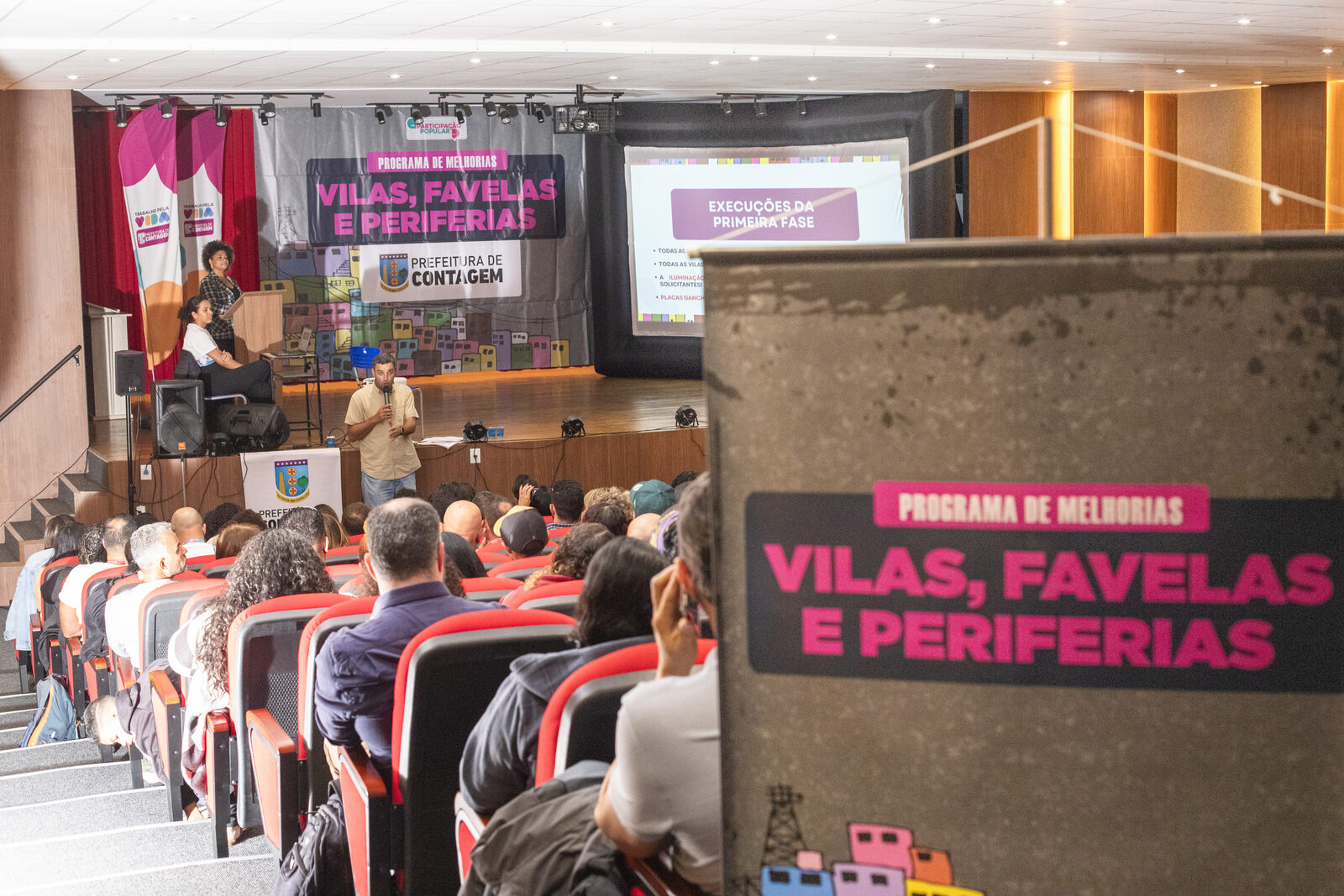
The process began with a citywide mobilisation organised through Contagem's eight administrative regions. Between December 2024 and January 2025, residents were invited to identify the main infrastructure needs affecting their communities through both an online consultation on the Decide Contagem digital platform and paper-based forms available in regional administrative offices. This hybrid approach sought to reduce barriers to participation by combining digital engagement with in-person support. In total, 2,249 residents submitted 5,639 proposals covering 114 villages, informal settlements and peripheral neighbourhoods, providing the municipality with a detailed territorial diagnosis based on community priorities.
The information collected constitutes the basis for a second stage in which municipal technical teams analyse proposals according to feasibility, social impact and available resources. Rather than replacing citizen participation, this technical assessment is conducted in continuous dialogue with community representatives, ensuring that investment priorities reflect both local demands and implementation capacity.
A key methodological innovation of the programme is the creation of the Municipal Council of Informal Settlements and Peripheral Neighbourhoods, establishing a permanent institutional mechanism through which residents participate beyond the consultation phase. Representatives are elected directly by their communities through regional assemblies open to residents over the age of eighteen. During the programme's first electoral process, 179 candidates stood for election and 152 councillors (86 full members and 66 alternates) were elected by more than 1,700 voters, representing 86 communities. The Council accompanies project implementation, monitors public investment and serves as a permanent channel of dialogue between communities and the municipal administration.
The programme combines digital participation with continuous territorial engagement. Alongside the Decide Contagem platform, residents participate through community meetings, regional assemblies, technical site visits and open monitoring sessions. Information on ongoing projects is disseminated through municipal communication channels, social media, printed publications and accountability reports distributed within the communities. This combination of online and face-to-face participation enables residents not only to define priorities but also to follow the progress of interventions and provide feedback throughout implementation.
Another innovative aspect of the practice is the integration of participatory planning with urban investment. Rather than operating as a standalone consultation process, citizen proposals directly inform the selection and sequencing of infrastructure works, including street paving, drainage systems, public lighting, sanitation improvements, slope stabilisation and the upgrading of public spaces. Participation therefore becomes a structural component of municipal planning rather than an isolated engagement exercise.
The programme places particular emphasis on inclusion by focusing on territories experiencing the greatest social and urban vulnerability. Women, young people and older residents are encouraged to participate through accessible consultation mechanisms and community-based mobilisation supported by regional municipal teams. Combining digital and in-person participation has helped broaden access for residents who may otherwise face barriers to engaging in municipal decision-making.
Monitoring and accountability are embedded throughout implementation. Municipal departments monitor the execution of works using technical and social indicators, while the Municipal Council oversees implementation, accompanies field visits and acts as a channel through which communities can assess progress and propose adjustments. Results from consultations and monitoring activities inform subsequent investment cycles, allowing priorities to evolve according to emerging territorial needs.
According to the municipality, more than R$ 8.8 million had been invested by 2025, benefiting approximately 96,000 residents. Public lighting, identified as one of the main priorities during consultations, received 623 requests, of which around 80% had already been addressed. Beyond infrastructure improvements, the programme has strengthened community participation by incorporating citizen proposals into urban planning and establishing a permanent representative body for neighbourhood oversight and dialogue.
By linking territorial diagnosis, participatory planning, representative governance and urban investment, the Programme for the Improvement of Informal Settlements, Favelas and Peripheries illustrates a model in which citizen participation becomes an integral component of urban management. Through permanent mechanisms for consultation, representation and monitoring, the initiative seeks to reduce territorial inequalities while strengthening democratic governance in historically underserved communities.







Jury comments
"The programme demonstrates how citizen participation can be translated into tangible urban improvements, combining community decision-making with concrete public investment to improve the quality of life in historically underserved neighbourhoods."
"Its greatest strength lies in the institutionalization of participation through the Municipal Council of Informal Settlements, Favelas and Peripheries, creating a permanent channel for dialogue, oversight, and shared decision-making between residents and local government."
"By combining multiple participatory mechanisms with a strong territorial focus on vulnerable communities, the initiative offers a compelling example of inclusive urban governance, ensuring that local priorities directly shape public investment and urban development."
"A compelling example of how participatory governance can deliver visible improvements where they are needed most."