 Special Mention for Gender and Care
 Makassar
Indonesia
Makassar
C) Gender and Care
Special Mention for Gender and Care
Makassar Inclusive City Movement website
https://kotakita.org/youth-led-participatory-data-for-disability-inclusive-city-in-makassar
City of Makassar website
https://makassarkota.go.id/
The practice on the ParticipateOIDP website
https://participate.oidp.net/processes/award2026/f/305/proposals/3825
Makassar is the largest metropolitan city in Eastern Indonesia, with a population of approximately 1.48 million inhabitants. As a major regional hub, the city has committed to promoting more inclusive urban development. However, according to the municipality, persons with disabilities (PwDs) continue to face significant barriers to education, employment, public services and civic participation. Although Makassar adopted a local regulation on the rights of persons with disabilities in 2013, this framework had not been updated following Indonesia's 2016 national disability law, limiting the effective inclusion of PwDs in urban planning and decision-making.
The Makassar Inclusive City Movement was launched in 2025 through a collaboration between the City of Makassar, the Local Development Planning Agency (BAPPEDA), the civil society organisation Kota Kita, and Organisations of Persons with Disabilities (OPDs). The initiative seeks to mainstream disability inclusion within urban governance by ensuring that persons with disabilities participate directly in the production of knowledge, the formulation of public policies and municipal planning and budgeting processes. Rather than treating disability as a separate social issue, the practice integrates inclusion into the city's broader urban development agenda.
The methodology began with a participatory mapping process designed to produce an updated profile of persons with disabilities across Makassar, including residents of the city's small islands. Rather than positioning persons with disabilities as survey respondents, the initiative involved OPDs as equal partners responsible for guiding data collection, validating information and identifying local priorities. The process documented 5,171 persons with disabilities, almost three times the number recorded in official statistics, revealing significant gaps in public data and unmet needs related to accessibility, identification documents, social protection and participation.
Following the data collection phase, the municipality established a Disability Action Plan Team to prepare the Regional Action Plan for Persons with Disabilities (2025–2029). Guided by the principle "Nothing About Us Without Us," organisations of persons with disabilities participated directly in drafting the policy framework. The participatory disability profile was subsequently presented to the Mayor and municipal departments, informing policy priorities across the local administration.
The initiative then expanded participation by introducing Makassar's first thematic participatory planning and budgeting forum dedicated to vulnerable groups. For the first time, persons with disabilities participated collectively alongside women, older people and children, submitting 31 policy proposals for consideration within the city's planning process. According to the municipality, this broadened participation beyond the previous model, in which a single representative spoke on behalf of the disability community.
A key innovation lies in combining participatory data production with participatory governance. The initiative demonstrates how citizen-generated evidence became the foundation for institutional change, transforming persons with disabilities from beneficiaries into active contributors to policy design, implementation and monitoring. The disability profile also encouraged municipal departments to integrate disability considerations into their programmes and budgets.
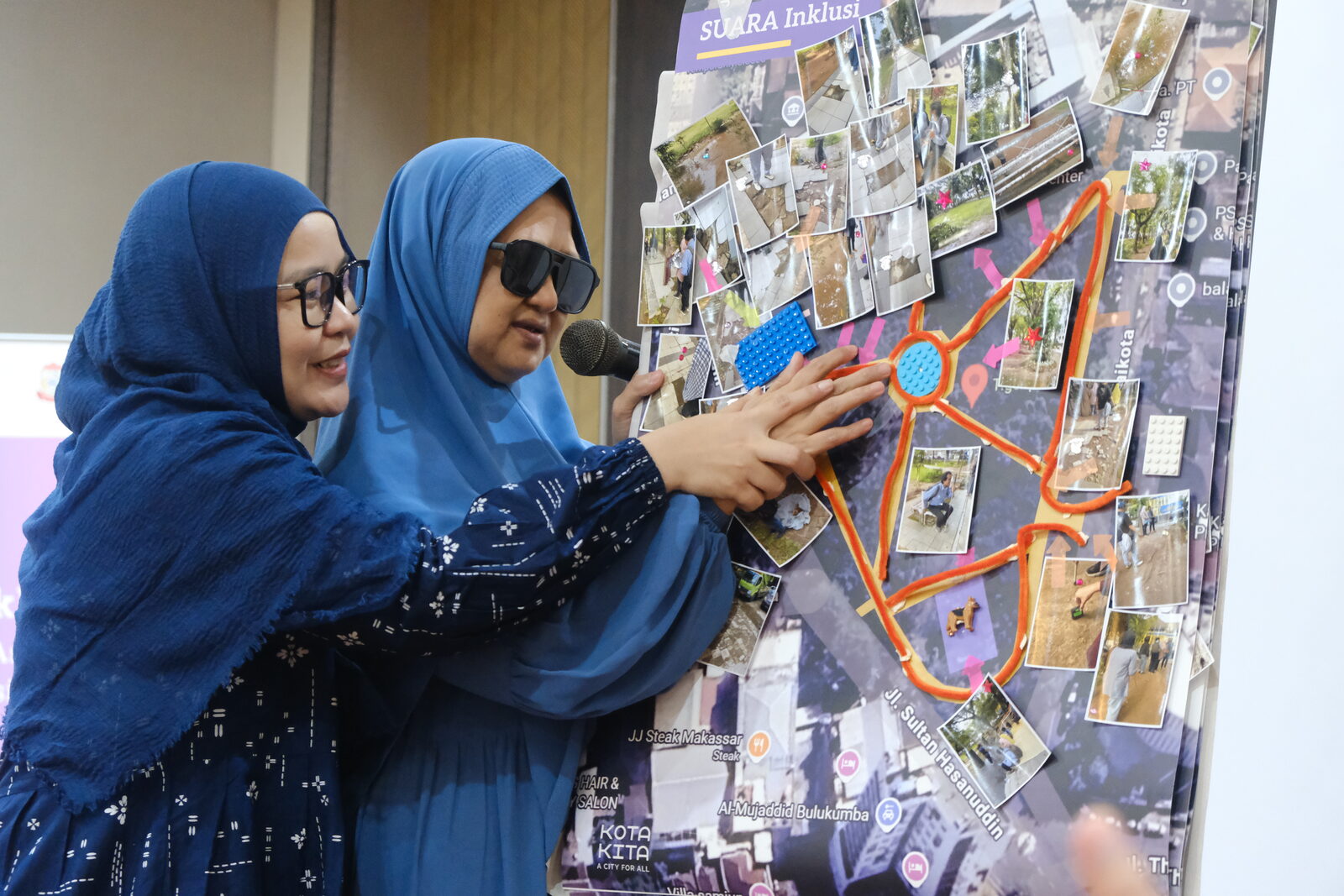
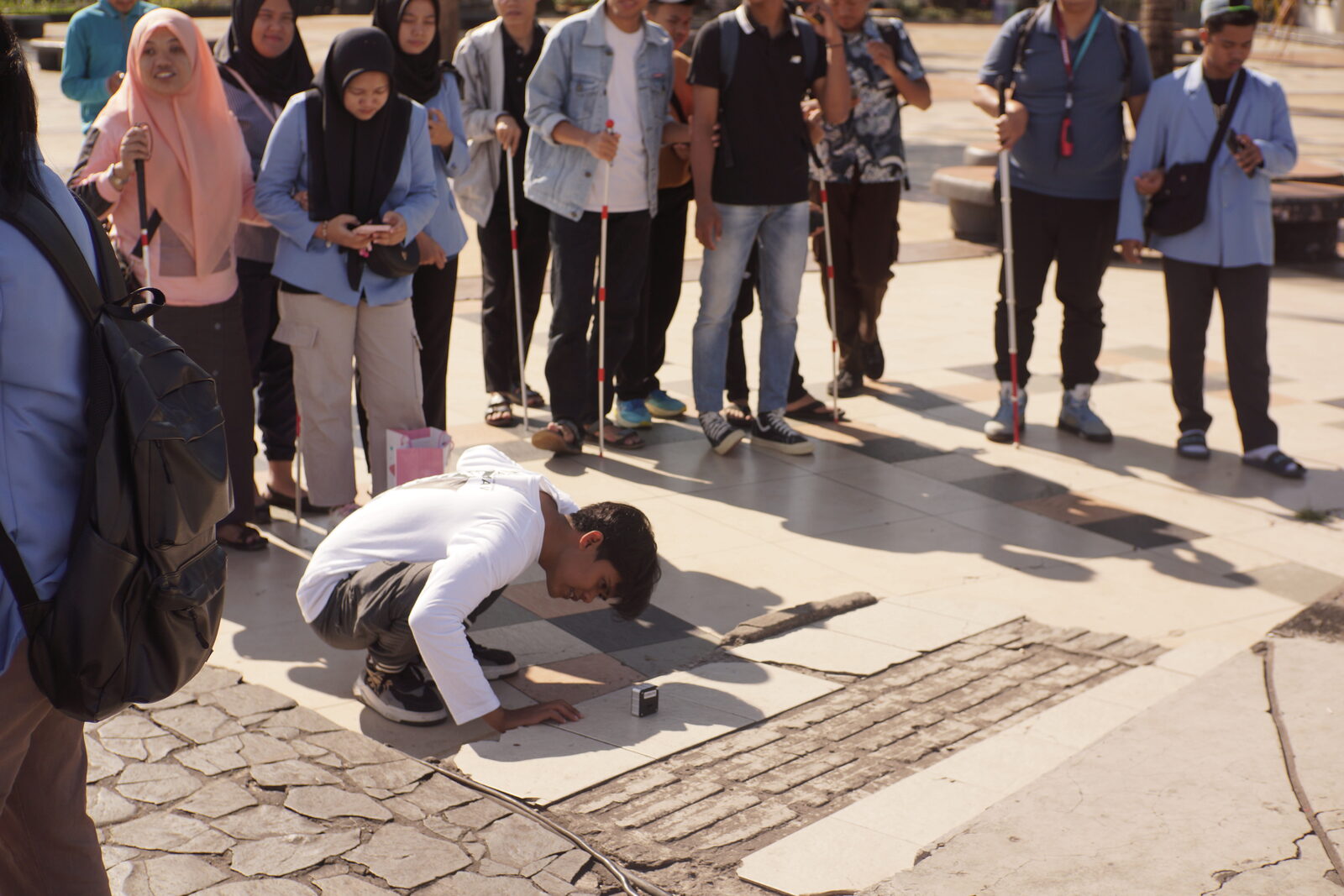
Another innovative component is the creation of SUARA Inklusi (Inclusive Voice), a coalition bringing together ten organisations of persons with disabilities. Supported by Kota Kita, the coalition strengthened organisational capacity through training and carried out Makassar's first accessibility audit led by persons with disabilities, incorporating the perspectives of people with physical, psychosocial and intellectual disabilities.
The practice places strong emphasis on inclusion by adapting participation methods to different accessibility needs through tactile maps, sign language interpretation, visual communication tools and simplified facilitation methods. Outreach also extended to geographically isolated island communities.
Monitoring and evaluation combine participatory validation workshops, public feedback sessions and accessibility audits led by organisations of persons with disabilities. Disability data and recommendations continue to inform departmental planning and budget allocation, supported by disability budget tagging.
According to the municipality, the participatory mapping identified approximately 4,000 previously undocumented persons with disabilities, prompting policy responses including the regularisation of identity documents, the appointment of a young woman with a disability as adviser to the Mayor, the establishment of the thematic participatory planning process, and the institutionalisation of the SUARA Inklusi coalition.
By combining participatory data collection, accessible deliberative processes, capacity building and institutional reform, the Makassar Inclusive City Movement illustrates how disability inclusion can become an integral component of urban governance. Through the principle "Nothing About Us Without Us," the practice demonstrates how participatory planning can strengthen equity by ensuring that persons with disabilities directly shape the policies that affect their lives.









Jury comments
"The Makassar Inclusive City Movement is a powerful example of participatory governance that places persons with disabilities at the centre of public decision-making, demonstrating how inclusive planning can reshape urban policy through co-creation, reliable data, and shared leadership."
"The practice stands out for its strong ethical foundation and innovative approach, combining participatory mapping, disability-led planning, and dedicated participatory budgeting to ensure that voices traditionally excluded from urban governance directly influence public policy."
"By embedding disability inclusion into planning, budgeting, and institutional decision-making, the initiative represents an inspiring step towards more equitable and accessible governance, showing how participation can drive lasting cultural and policy change despite the challenges of measuring inclusion."
"An inspiring example of inclusive governance that turns the principle of 'nothing about us without us' into public policy."