 Special Mention for the Most Supported Practice by the OIDP Community
 Gwanak-gu
South Korea
Gwanak-gu
Special Mention for the Most Supported Practice by the OIDP Community
Beyond Promises: Citizen-Led Manifesto Governance in Gwanak-gu website
https://www.gwanak.go.kr/site/365/bbs/list.do?cbIdx=631
Gwanak-gu Local Government website
https://www.gwanak.go.kr/site/eng/main.do
The practice on the ParticipateOIDP website
https://participate.oidp.net/processes/award2026/f/304/proposals/3920
The Most Supported Practice by the OIDP Community:
The proposal put forward by the Local Government of Gwanak-gu Municipality garnered 914 votes through the open voting process on the ParticipateOIDP platform, distinguishing itself as the preferred choice of the public.
Gwanak-gu is located in southwestern Seoul, Republic of Korea, and has a population of approximately 478,000 inhabitants. The district combines extensive residential neighbourhoods with major educational and innovation hubs, including the Seoul National University and the Gwanak S-Valley startup cluster. More than 40% of its population is made up of young residents, while long-term inhabitants, elderly populations and lower-income households continue to represent an important part of the community. This demographic diversity, together with relatively low levels of trust in local government and limited civic engagement, encouraged the municipality to strengthen citizen participation in local decision-making.
The practice Beyond Promises: Citizen-Led Manifesto Governance in Gwanak-gu was launched in 2022 with the objective of integrating citizens into the management of the local administration's electoral pledges. Rather than treating election promises as commitments implemented solely by the administration, the municipality established a participatory governance model that enables residents to contribute throughout the policy cycle—from the definition of priorities to implementation, monitoring, evaluation and adaptation.
The participatory process began immediately after the local elections with the creation of a 26-member Policy Planning Group composed of public officials, academics, civil society representatives, business leaders, students and community members. Through plenary meetings, thematic working groups and expert consultations, participants reviewed previous policy experiences, discussed local priorities and jointly developed the municipality's Four-Year Pledge Implementation Plan. This collaborative process resulted in the adoption of 60 pledge initiatives organised under six strategic policy objectives.
Rather than ending with the approval of the plan, citizen participation was institutionalised throughout the implementation of the electoral programme. The municipality established several permanent participatory bodies with complementary functions. The Innovation and Collaboration Committee reviews implementation progress and provides strategic recommendations, while the Policy Advisory Group, composed of 125 members, contributes technical expertise and sectoral perspectives. In parallel, a Citizen Jury System, randomly selected among citizens, deliberates on proposed adjustments to government commitments when implementation conditions change, allowing citizens to participate directly in reviewing and adapting municipal policies.
A key innovation of the practice is the integration of these deliberative mechanisms with continuous digital participation through the Online Gwanak Office. The platform centralises information on all municipal pledges, enabling residents to monitor implementation, submit policy proposals, participate in discussions and receive responses from responsible departments throughout the year. Interactive tools such as the Pledge Thermometer, the Pledge Ledger and the Regional Pledge Map present implementation progress in an accessible format, while real-time information supports both public oversight and administrative monitoring. According to the municipality, the platform has registered more than 2.13 million cumulative visits.
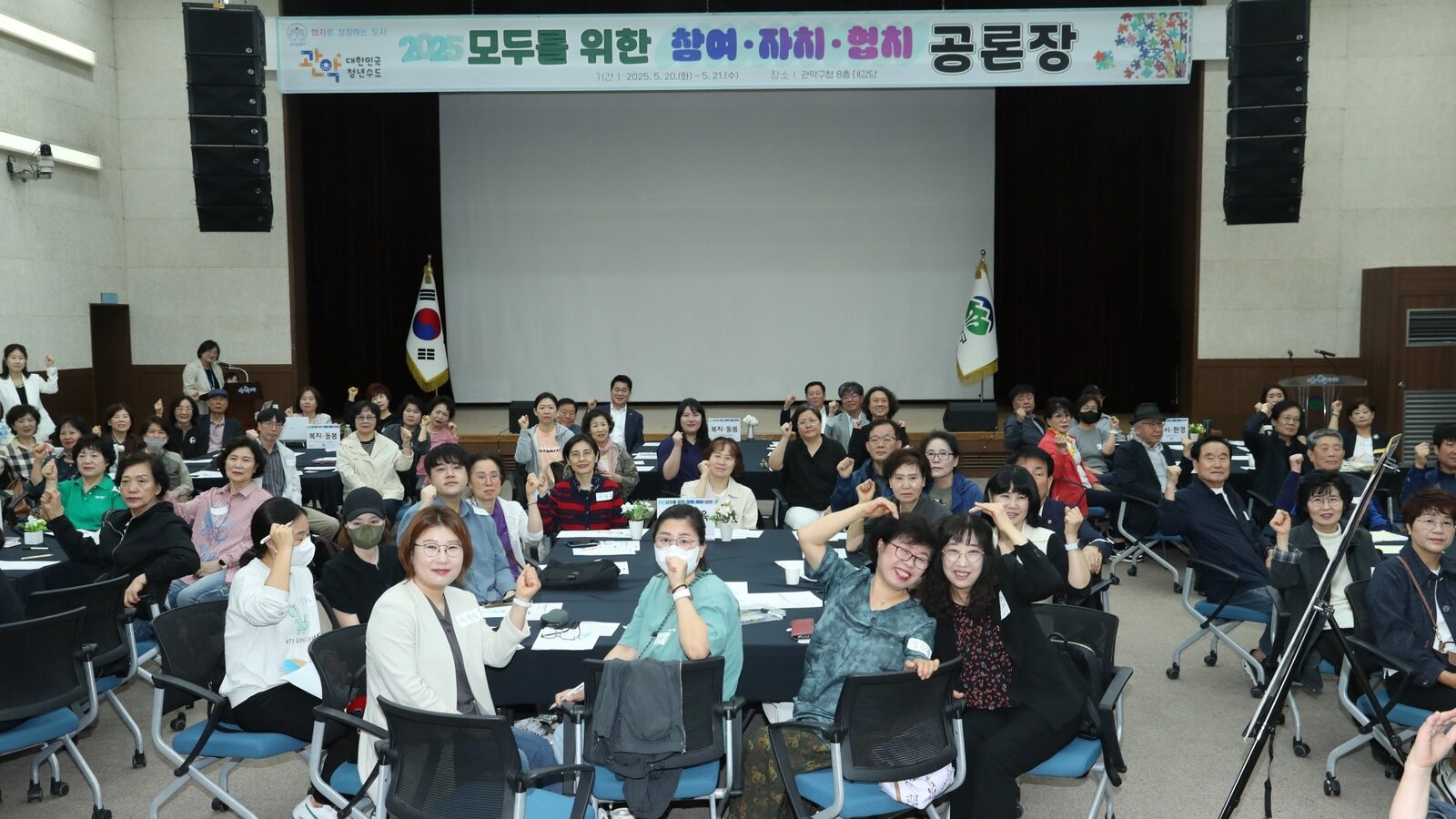
Digital participation is complemented by face-to-face engagement. Municipal officials regularly organise meetings in neighbourhood facilities, schools and senior centres to present implementation progress and gather residents' feedback. Citizens also participate through QR-code voting, telephone surveys and public consultations, while communication is maintained through newsletters, social media, YouTube, KakaoTalk and public information displays. To encourage broad participation, the municipality also established dedicated participatory structures for young people, children and local businesses, including the Youth Network, Youth Policy Committee, Youth Autonomous Council, Children's Policy Monitoring Group and the Venture Business Promotion Committee.
Participation extends to the monitoring and evaluation of the practice. Implementation is reviewed through quarterly administrative assessments, biannual public reporting meetings chaired by the mayor, annual Citizen Jury deliberations and resident satisfaction surveys, complemented by independent external evaluation conducted by the Korea Manifesto Center. According to the application, the governance framework is also linked with participatory budgeting and other public-private governance initiatives, embedding citizen participation within the municipality's regular administrative structure rather than treating it as a standalone programme.
According to the municipality, by the end of 2025 the pledge fulfilment rate had reached 97.7%, with 35 of the 60 pledge initiatives completed, while resident satisfaction with municipal administration stood at 80.3%. The practice has also received national and international recognition for its participatory governance model and digital participation platform.
Overall, the practice illustrates a model of participatory governance that institutionalises citizen involvement in the management of electoral pledges. By combining collaborative planning, representative advisory bodies, randomly selected deliberative mechanisms, digital participation and transparent monitoring, Gwanak-gu has established multiple channels through which residents can contribute to local decision-making and oversee the implementation of government commitments.





Jury comments
"Gwanak-gu demonstrates how participatory democracy can be embedded throughout the entire public policy cycle, combining digital innovation, transparency, and multiple channels for citizen engagement to strengthen trust between residents and local government."
"The practice stands out for its comprehensive governance model, enabling citizens not only to propose ideas but also to monitor implementation, track public commitments, and engage in continuous dialogue with the administration through an accessible digital platform."
"By institutionalizing participation, enhancing accountability through transparent monitoring, and creating a structured system for citizen involvement, Gwanak-gu offers a strong and transferable model for rebuilding public trust and making local policymaking more open and responsive."
"A comprehensive model of transparent and continuous citizen participation that helps rebuild trust in local government."