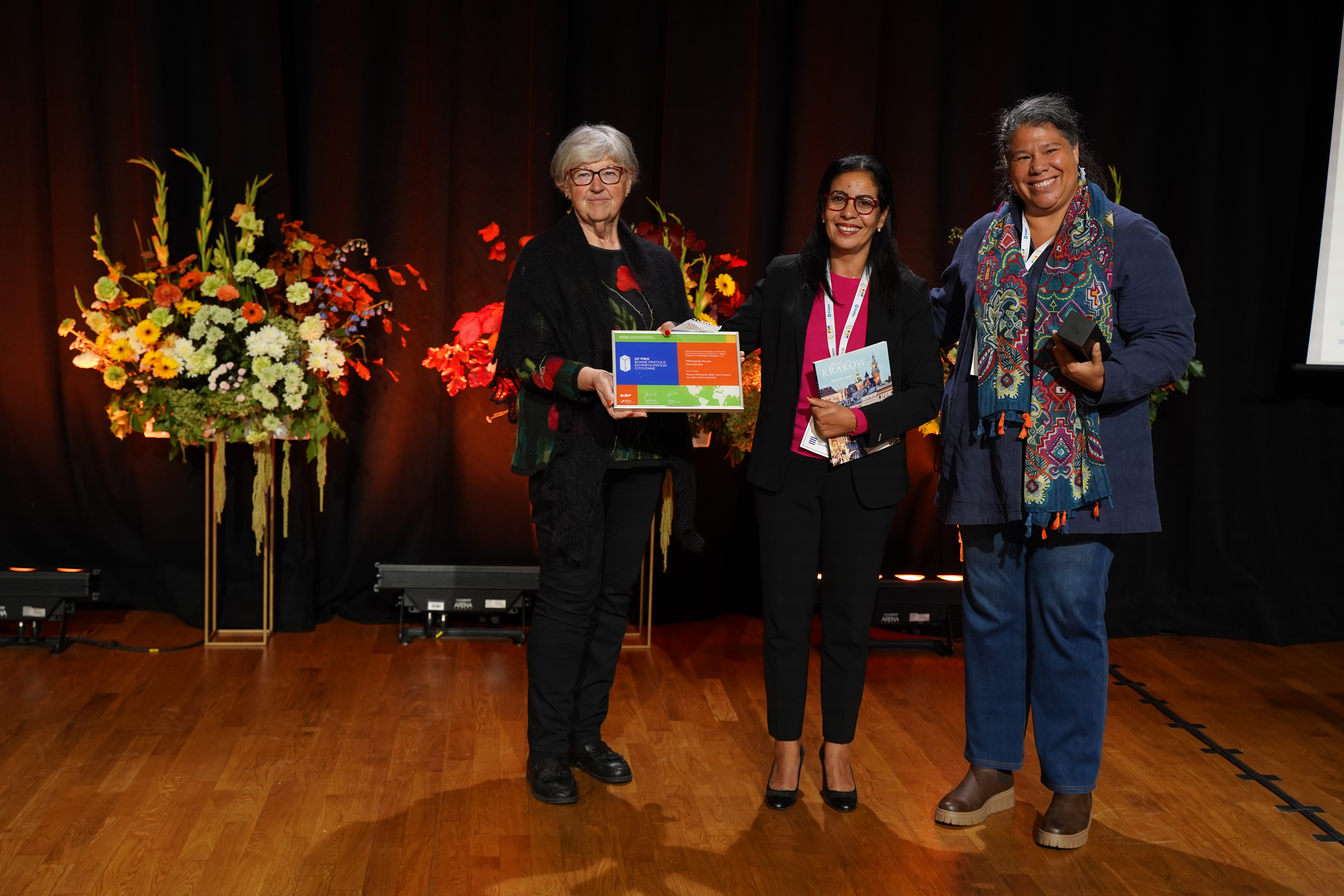
With its initiative "Rouen Métropole 2050: Citizens at the Heart of the Transition", the Métropole Rouen Normandie (France) has been recognised with the 20th OIDP Award for the Best Practice in Citizen Participation. The trophy was presented during the Award Ceremony held on 22 September 2026, as part of the 25th OIDP Conference in Kraków, Poland.
The winning initiative, "Rouen Métropole 2050: Citizens at the Heart of the Transition", transforms long-term metropolitan planning into a participatory process where citizens, public institutions and local stakeholders jointly shape the future of the territory. Through an innovative combination of large-scale public engagement, a Citizens' Convention on Transitions and a permanent citizen monitoring mechanism, the initiative ensures that residents actively contribute to decisions on climate action, social justice, urban development and territorial resilience.
Among the initiative's most innovative features are a 360-degree participation strategy involving more than 70 complementary engagement mechanisms, a Citizens' Convention on Transitions bringing together 80 randomly selected residents over nine months, and a Citizen Monitoring Committee ensuring that citizens continue to oversee how their recommendations are reflected in planning decisions. Between 2023 and 2025, more than 3,600 people participated in shaping Rouen's long-term vision for 2050.
As highlighted by the Jury:
"Rouen Métropole 2050 demonstrates that even the most complex planning processes can be genuinely co-developed with citizens, transforming a traditionally technical exercise into a participatory process that gives residents a real voice in shaping the future of their territory."
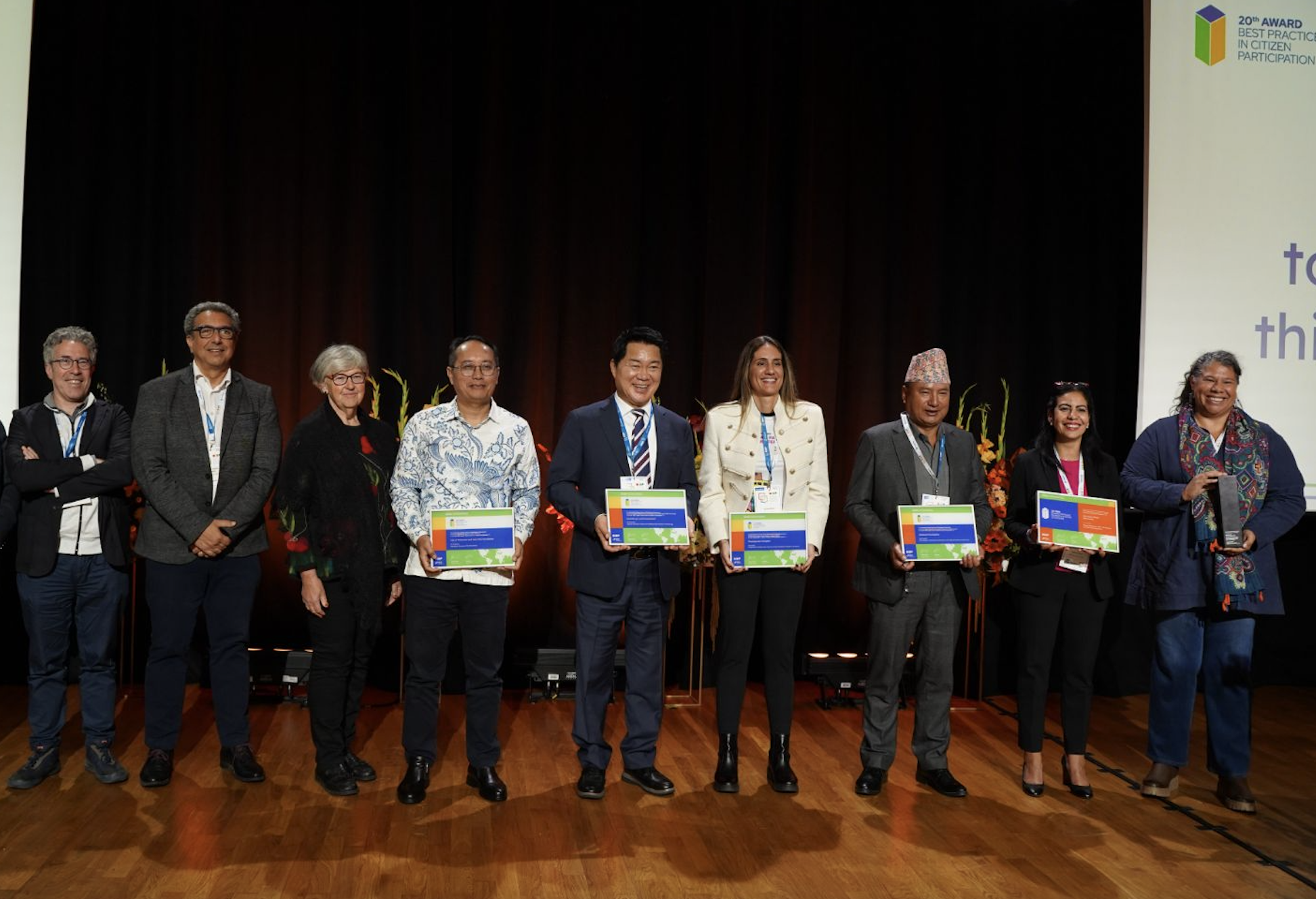
Six Special Mentions of the 20th OIDP Award
The OIDP Jury also recognised five outstanding initiatives with Special Mentions:
Urban Management and Public Space: Contagem (Brazil) – "Program for the Improvement of Informal Settlements, Favelas and Peripheries"
Gender and Care: Makassar (Indonesia) – "Makassar Inclusive City Movement"
Ecological Transition and Environment: Dhankuta (Nepal) – "Participatory Watershed Governance in the Nibuwa–Tankhuwa Catchment"
Civic Tech: Auckland (New Zealand) – "Buzzly Youth Engagement Platform"
Sustainability: Ramallah (Palestine) – "Ramallah Youth City Council (RYCC)"
In parallel with the Jury's deliberations, the 40 finalist practices were presented on the OIDP Participate platform, where citizens and members of the OIDP community were invited to vote for their favourite initiative. More than 1800 people took part in the online vote, which resulted in the Special Mention for the Most Supported Practice by the OIDP Community, awarded to Gwanak-gu (South Korea) for the practice "Beyond Promises: Citizen-Led Manifesto Governance in Gwanak-gu”.
The 20th OIDP Award
The 20th edition of the OIDP Award received 188 submissions, of which 176 were declared eligible, representing 138 local and regional governments from 41 countries. These figures reflect the growing global commitment of local governments to strengthening democracy through meaningful citizen participation, and they demonstrate the increasing diversity and quality of participatory practices being implemented around the world.
This year's submissions addressed a wide range of challenges – from democratic innovation and civic technology to ecological transition, inclusive urban planning, gender equality and social cohesion – showcasing how local and regional governments continue to develop innovative approaches to involving residents in public decision-making.
As in previous editions, all eligible practices have been compiled in a digital publication, providing local governments, practitioners and citizens with a valuable source of inspiration to strengthen participatory democracy and build more inclusive, sustainable and resilient communities.
More information
Explore the 20th OIDP Award publication here.
Explore the digital compilation of submissions to the 20th OIDP Award.
Access the OIDP Award website.
Discover the photos from the 25th OIDP Conference in Kraków on Flickr, and relive the conversations, exchanges and highlights that brought the OIDP community together.





 Join the OIDP