From 21 to 23 September 2026, the city of Kraków, together with the OIDP Secretariat and United Cities and Local Governments (UCLG), hosted the 25th Annual Conference of the International Observatory on Participatory Democracy (OIDP). The three-day gathering brought together local and regional government representatives, political leaders, public officials, academics, civil society organisations, activists and practitioners from around the world to reflect on the future of participatory democracy in a context of growing democratic challenges.
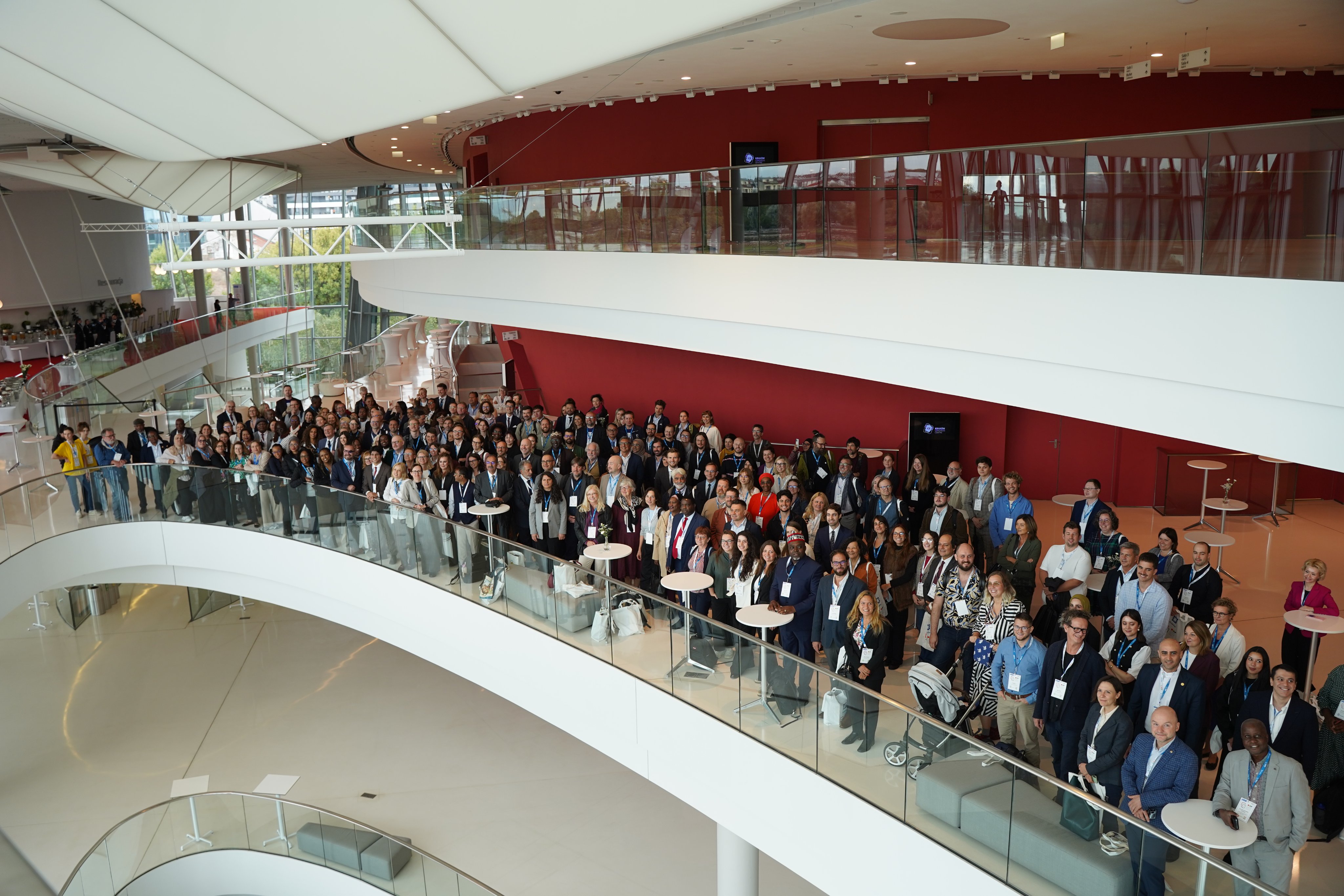
Under the theme “Hope and Renewal in the Face of a Global Crisis of Democracy: The Future of Participatory Democracy from Local to International Governance”, the 25th edition of the Conference explored how meaningful citizen participation can strengthen democratic resilience, rebuild trust in institutions and contribute to more inclusive and responsive systems of governance.
Across three days, participants took part in more than 40 sessions, panels, workshops and project showcases, sharing experiences from cities and territories across the world and exploring practical approaches to participation, deliberation, civic education, human rights, youth engagement, gender equality, digital democracy and democratic innovation.
Day 1: Reimagining participation for democratic renewal
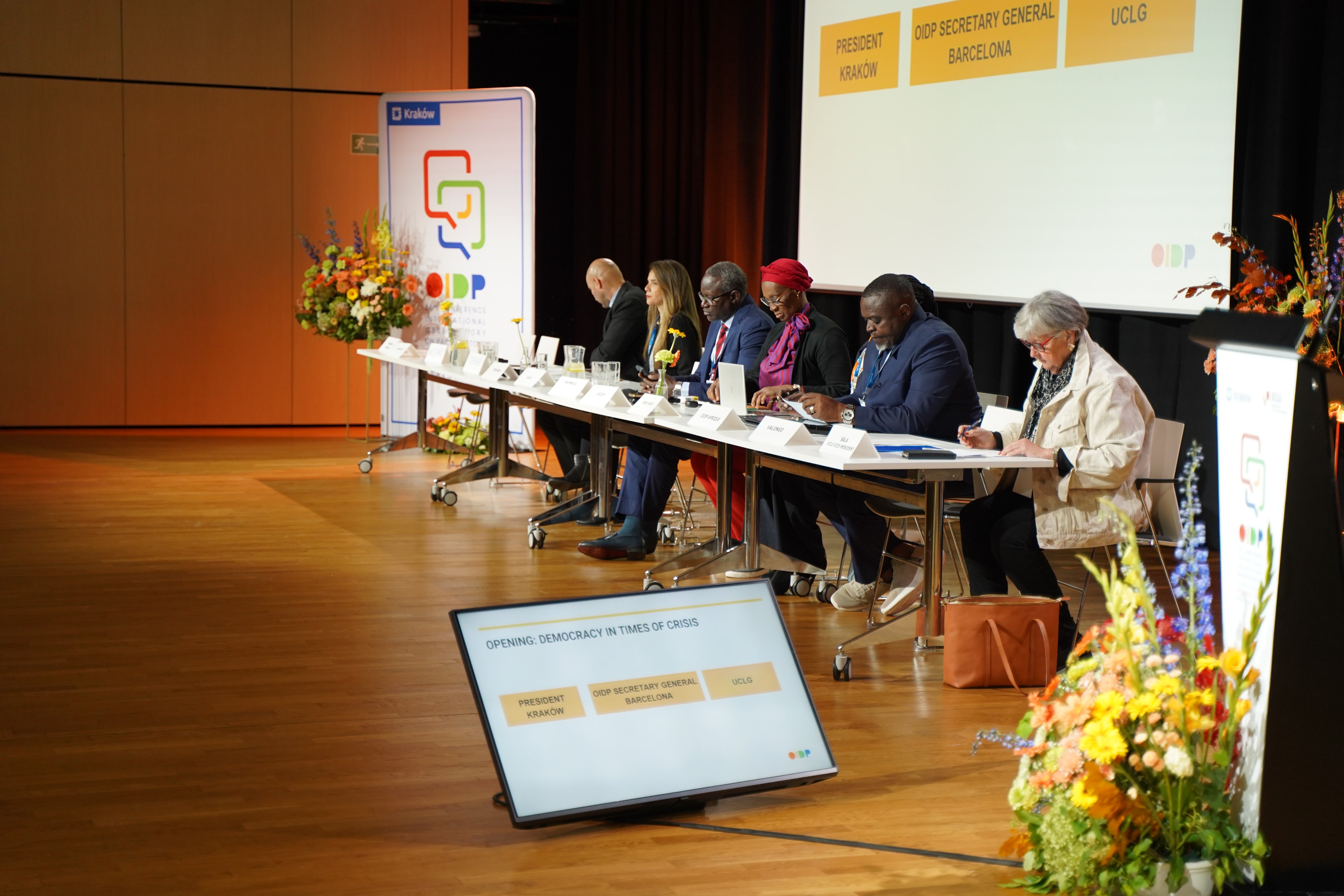
The Opening Ceremony set the tone for three days of discussion around a shared question: how can participatory democracy help renew democratic life at a time of growing polarisation, declining trust and pressure on democratic institutions?
Carola Gunnarsson, Vice-President of UCLG, highlighted the role of local democracy in rebuilding trust and strengthening democratic resilience:
“Democracy is not only a system of institutions but also daily practices in our towns and cities.”
She stressed that local governments are where people encounter public institutions in their everyday lives, making participation essential to strengthening the relationship between communities and institutions.
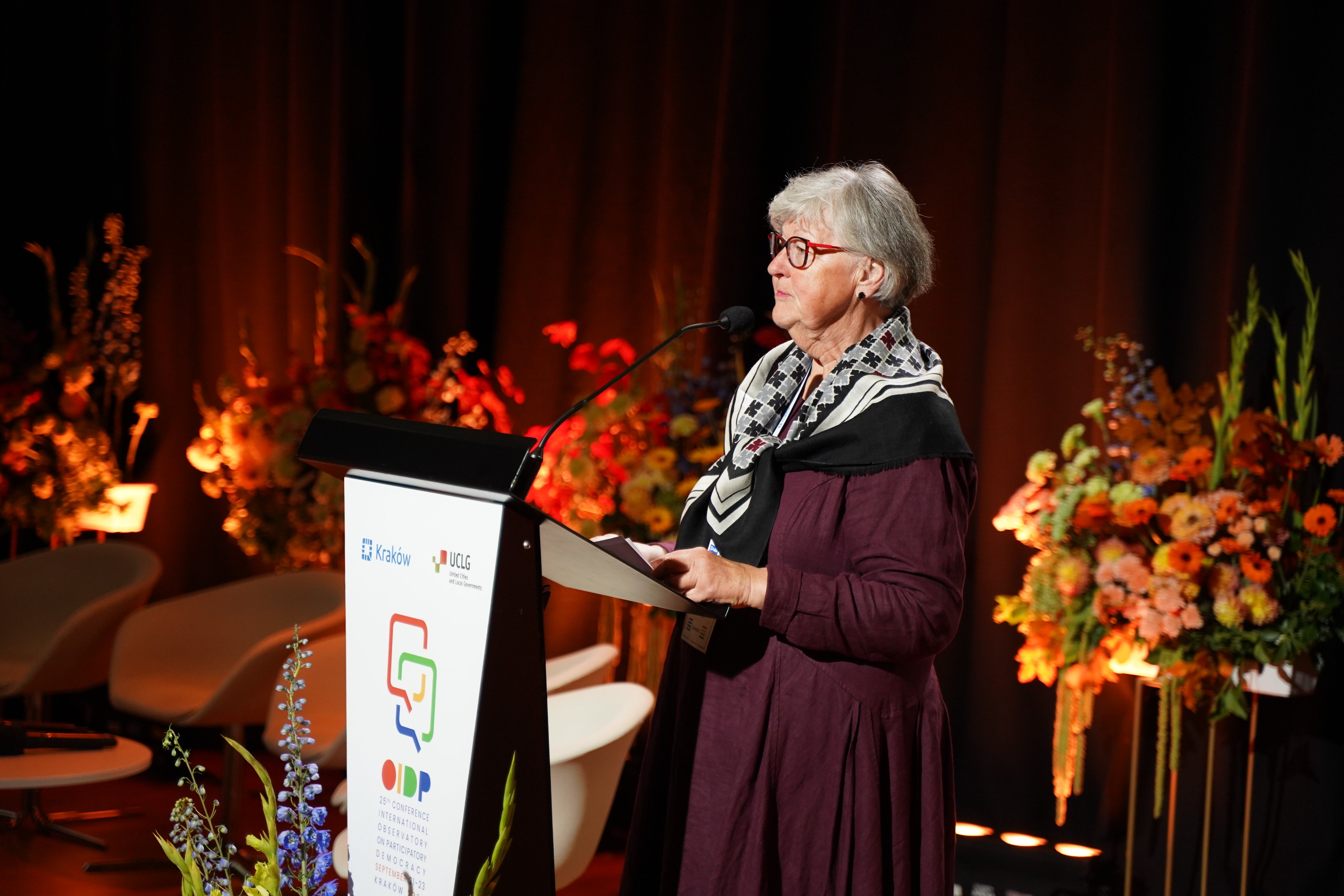
Looking towards the next 25 years, Pedro Aguilera, Commissioner of Citizen Participation of Barcelona and Secretary General of OIDP, asked: “What kind of democracy do we need for the next 25 years?”. He emphasised the role of local governments as spaces where participatory democracy can be experimented with, strengthened and built from the ground up.
Democratic resilience and renewal
The Opening Session examined some of the key pressures facing democracy today, including declining trust, polarisation, the perceived gap between democratic institutions and people's everyday needs, and the challenge of turning participation into meaningful influence on decisions.
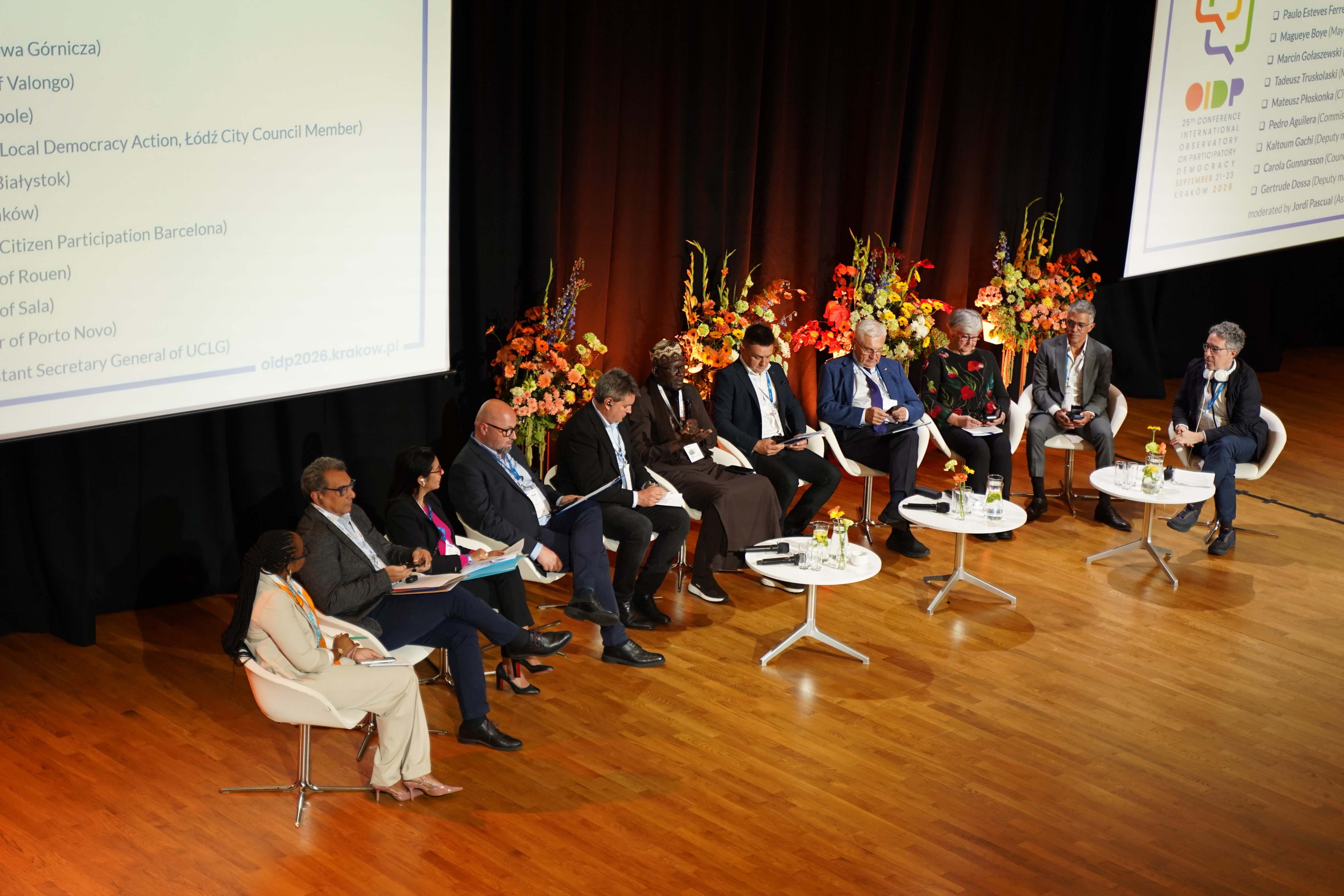
Miquel Vidal Bover, from the OECD, highlighted the importance of listening, delivery and inclusion. Participation, speakers stressed, is not simply about giving citizens a voice, but about ensuring that institutions have the capacity to respond and that people can see how their contributions shape public action.
Diana Dajer, member of the OIDP Advisory Committee, underlined the importance of changing the way democracy is understood and communicated. “We need a narrative transformation of democracy. We all need to be actors of democracy,” she stressed, pointing to the power of narratives to shape people’s beliefs and behaviours. The discussion also emphasised the need for clear processes, inclusive participation, transparency and continuous feedback, particularly when governments experiment with new participatory mechanisms.
Turning rights into action
The UCLG Committee on Social Inclusion, Participatory Democracy and Human Rights (CISDPDH) session “Turning Rights into Action: Local Pathways to Democratic Renewal,” moderated by Adrià Duarte, brought the human rights dimension of democratic renewal into focus.
Experiences from Gdańsk, Budapest, Vienna and Indonesia, together with the DeCiDE project, explored how cities can translate human rights into concrete policies, inclusive institutions and meaningful participation.
From anti-discrimination and equality policies in Gdańsk and Budapest to Vienna's experience as a Human Rights City, the discussion highlighted the importance of political commitment, dedicated structures and resources, as well as strong cooperation with civil society. The Indonesian experience further illustrated how local practices can inspire broader policy development.
The session also explored efforts to develop local monitoring mechanisms for human rights, highlighting the importance of generating evidence and strengthening the capacity of local governments and civil society to turn global frameworks into local action.
A recurring message throughout the discussion was the close relationship between human rights, democracy and participation. As Vienna's Human Rights Commissioner Shams Asadi emphasised:
“You cannot talk about democracy without talking about human rights.”
The session connected these local experiences with the Human Rights Cities movement and the New Global Charter-Agenda for Human Rights in the City, underlining the importance of placing rights and participation at the centre of democratic renewal.
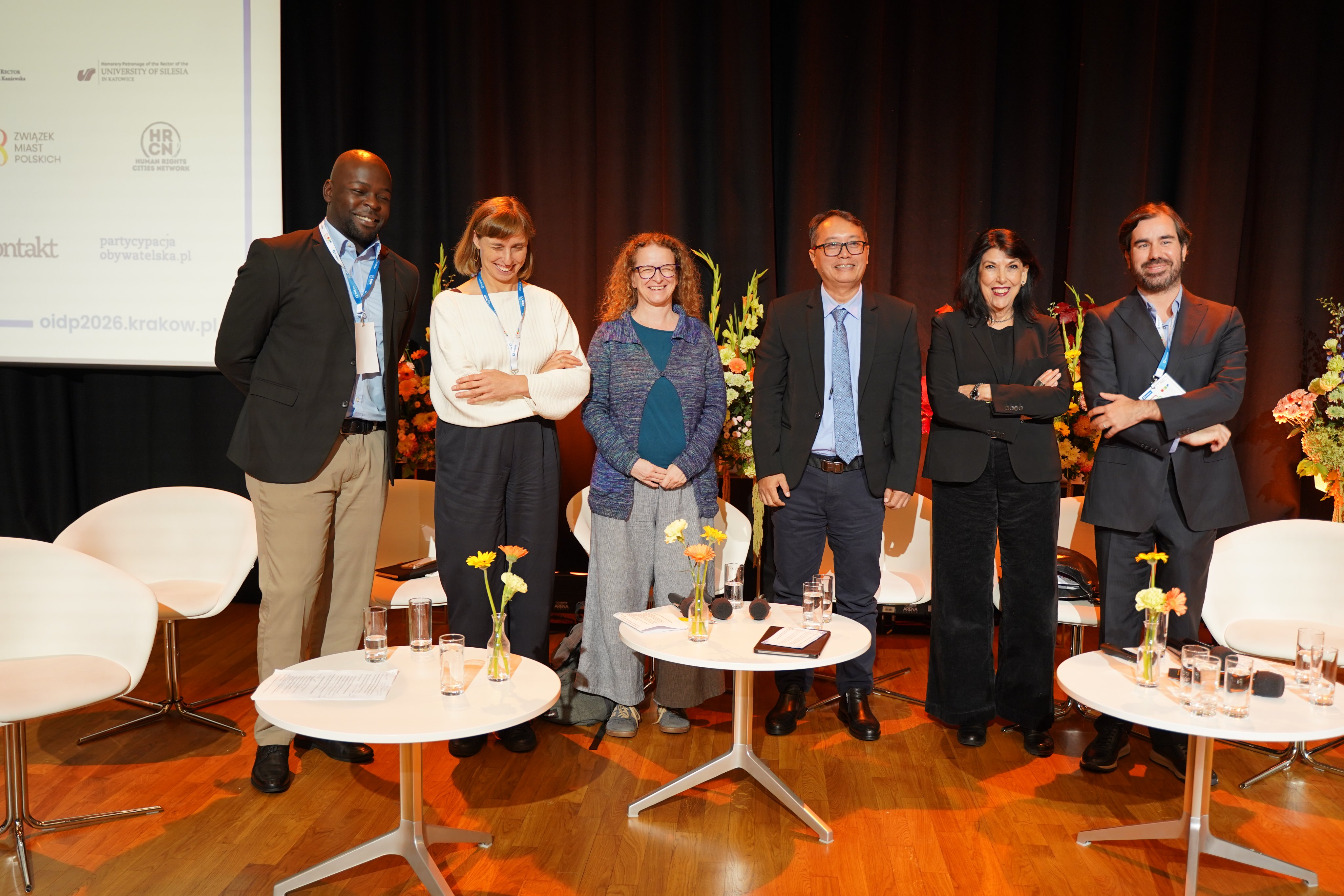
The first day continued with panels and workshops addressing community empowerment, participatory budgeting, democratic innovation in contexts of crisis and conflict, deliberation, constitutional democracy and inclusive participation and concluded with “Dialogue in a Frame”, a student photography contest gala.
Watch the sessions streamed on YouTube for Day 1 here
Retrieve the pictures from Day 1 here
Day 2: Local governments, inclusion and democratic innovation
The second day began with the plenary discussion “Local Governments in the Spotlight of Citizen Participation”, organised by OIDP and UCLG, and bringing together high level representatives from Dąbrowa Górnicza, Valongo, Khombole, Łódź, Białystok, Kraków, Barcelona, Rouen Normandie, Porto-Novo and Sala.
The discussion highlighted the importance of bringing democratic decision-making closer to residents and ensuring that participation goes beyond elections and consultation. As Paulo Esteves Ferreira, Mayor of Valongo, noted, “It does not make sense that people have the opportunity to be heard only every four years. Listening is the key to a democracy that works.” Drawing on Valongo’s experience with participatory processes over the past decade, he also stressed the importance of continuously reviewing and adapting participation mechanisms so that they remain inclusive and meaningful.
Magueye Boye, Mayor of Khombole, similarly framed participatory democracy around the connection between listening and action. “Participatory democracy is listening and taking action,” he explained, highlighting Khombole’s experience of involving residents in identifying local needs and participating in projects such as the construction of a schoolAcross the experiences shared, from participatory budgeting tools to digital platforms such as Decidim in Barcelona, a common message emerged: participation works best when residents can see how their contributions influence decisions and when the process remains open, transparent and predictable.
The discussion also addressed the challenges facing local democracy, including distrust, disinformation, polarisation and unequal participation.
Youth and gender equality in local democracy
As part of the Conference, UCLG, the WYDE Women’s Leadership initiative and NextGenC organised the workshop “Co-creating Youth-Inclusive and Gender-Equal Participation in Local Democracy”.
The session brought together local elected representatives, young leaders and practitioners working on youth participation and inclusive local governance, including contributions from NextGenC.
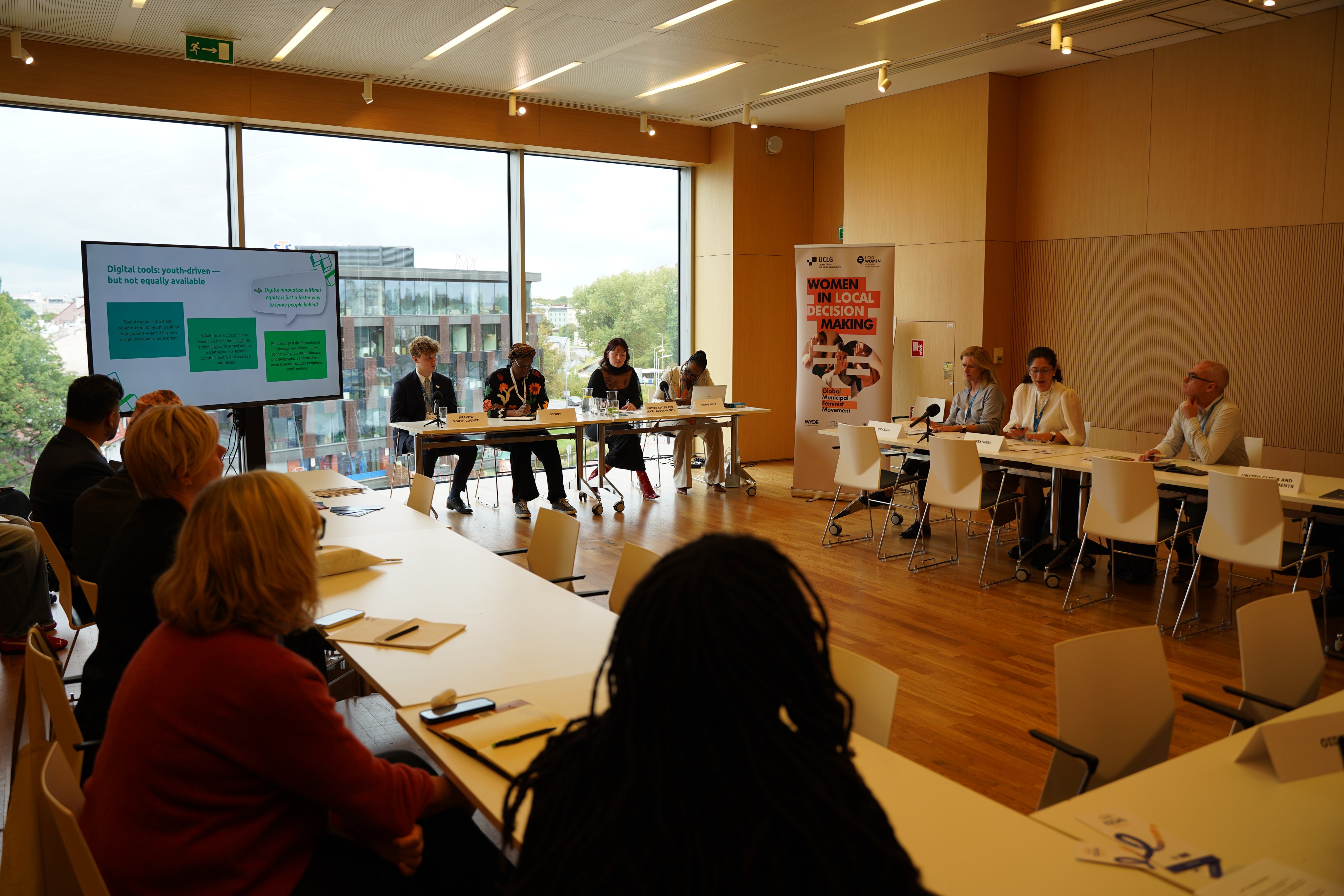
Discussions focused on the need to move from consultation towards co-creation and co-responsibility, ensuring that young people and women are not simply invited to participate but are given meaningful roles, resources and responsibilities in shaping their communities. As Gertrude Nadia Sena Dossa, Deputy Mayor of Porto-Novo, put it, “If we want young people to be part of co-creating decisions, they become part of the whole. We need to move from a logic of consultation to a logic of co-responsibility.”
This approach was echoed by Nelly Patricia Awa Ouassenan, Deputy Mayor of Cocody, who stressed that representation alone is not enough: “Equality means allowing them to participate in the decisions taken around the table, not simply giving them a seat.” The session also addressed the barriers that can prevent meaningful participation, including unequal access to digital tools, limited institutional trust and existing power imbalances. As highlighted by the NextGenC experience in Manizales (Colombia), digital innovation needs to be accompanied by attention to equity and inclusion so that new participation mechanisms do not reproduce existing inequalities.
The 20th OIDP Award celebrates innovative practices in citizen participation
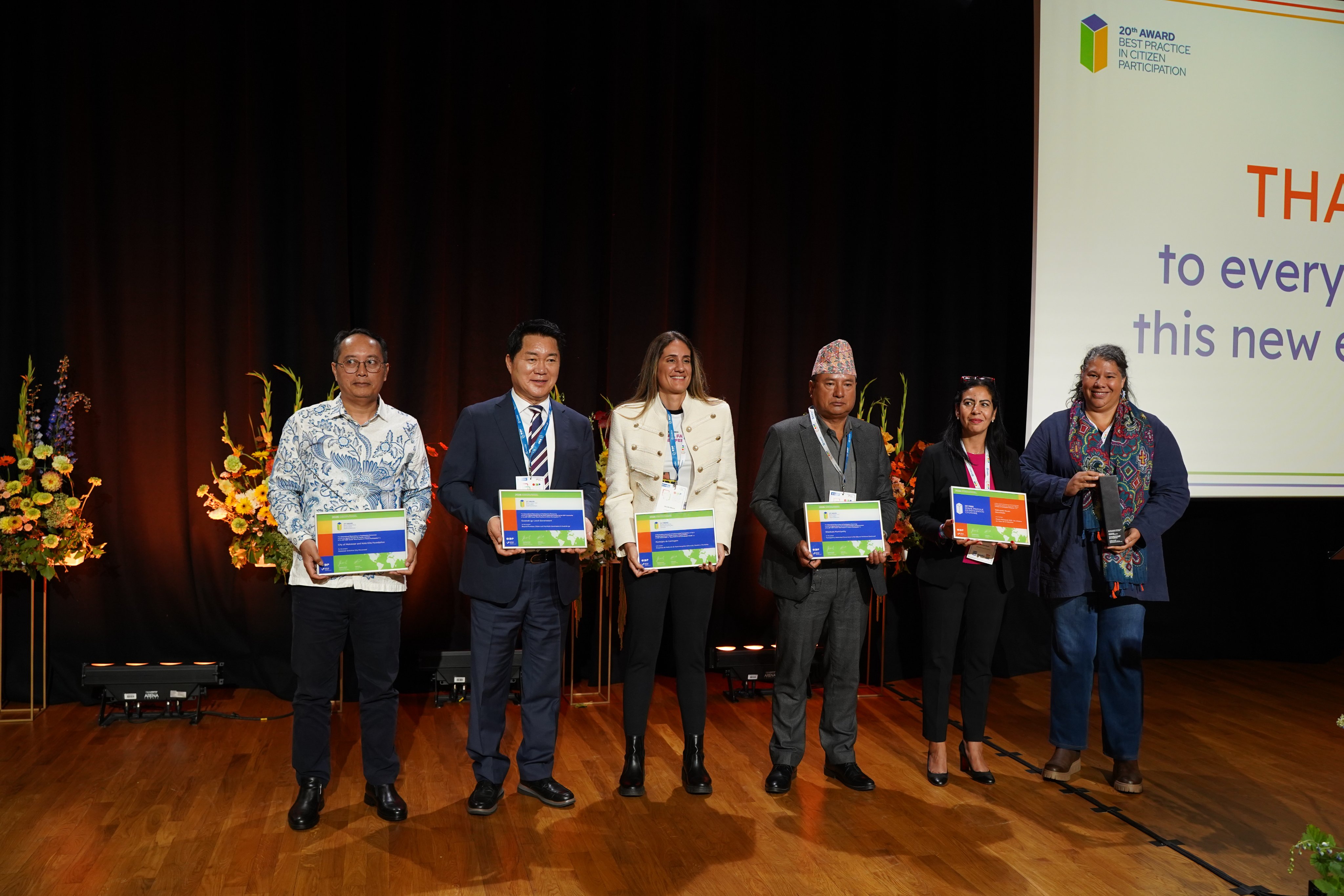
One of the highlights of the Conference was the ceremony of the 20th OIDP Award for “Best Practice in Citizen Participation”.
The 2026 edition received 188 submissions, with 176 eligible initiatives from 138 local and regional governments across 41 countries. Following the evaluation process, 40 finalist experiences were selected across five categories: Building More Democratic and Peaceful Communities, Urban Management and Public Space, Gender and Care, Ecological Transition and Environment, and Civic Tech.
The 20th OIDP Award was presented to Métropole Rouen Normandie, France, for its initiative “Rouen Métropole 2050: Citizens at the Heart of the Transition”. The initiative places citizens at the centre of shaping the territory's future, connecting participation with climate action, social justice, urban development and territorial resilience.
Six additional practices were recognised through Special Mentions:
Gwanak-gu Local Government, Republic of Korea — “Beyond Promises: Citizen-Led Manifesto Governance in Gwanak-gu”, recognised as the Most Supported Practice by the OIDP Community.
City of Contagem, Brazil — “Program for the Improvement of Villages, Favelas and Peripheral Areas”, receiving the Special Mention for Urban Management and Public Space.
City of Makassar, Indonesia — “Makassar Inclusive City Movement”, receiving the Special Mention for Gender and Care.
Municipality of Dhankuta, Nepal — “Participatory Watershed Governance in the Nibuwa–Tankhuwa Catchment”, receiving the Special Mention for Ecological Transition and Environment.
Auckland Council, New Zealand — “Buzzly Youth Engagement Platform”, receiving the Special Mention for Civic Tech.
Ramallah Municipality, Palestine — “Ramallah Youth City Council”, receiving the Special Mention for Sustainability.
The Award ceremony highlighted the diversity of participatory practices being developed by local and regional governments around the world, and the different ways in which participation can strengthen more inclusive, sustainable and democratic communities.
More information about the 20th OIDP Award here
Watch the sessions streamed on YouTube for Day 2 here
Day 3: Building the future of participatory democracy
The OIDP Award Winners’ Session showcased diverse approaches to participatory democracy, from territorial planning and ecological transition in Métropole Rouen Normandie, to inclusive governance for persons with disabilities in Makassar, participatory investment in vulnerable neighbourhoods in Contagem, and community-led water governance in Dhankuta. The session also highlighted youth participation initiatives in Auckland and Ramallah, demonstrating how local governments and communities are developing practical ways to make participation more inclusive, accessible and connected to concrete decisions and action.
Together, these experiences illustrate the diversity of approaches being developed across cities and territories, while also pointing to shared challenges: reaching people who are often excluded, sustaining participation over time, strengthening institutional capacity and ensuring that citizen contributions have a tangible impact on decisions.
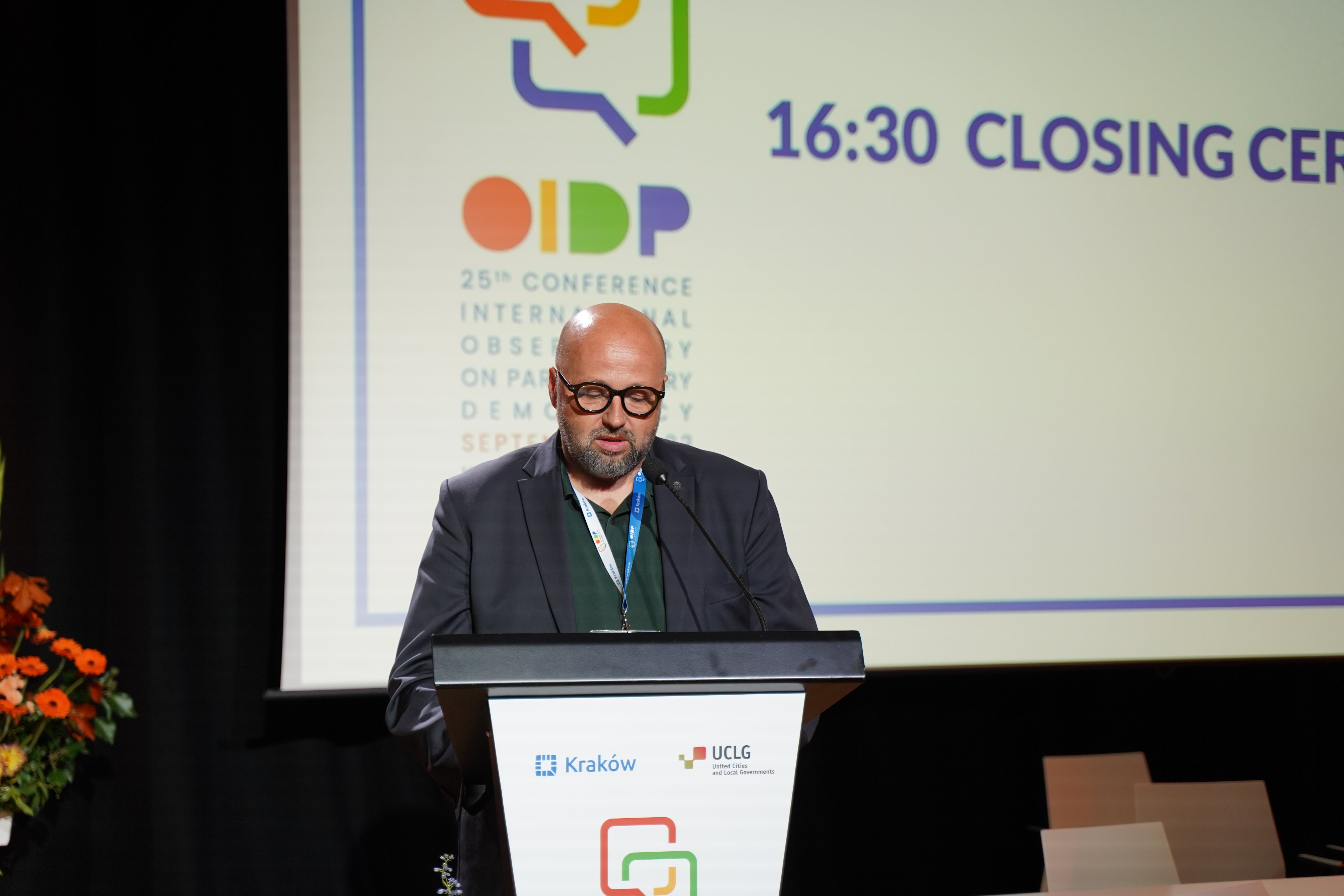
As Pedro Aguilera reflected during the closing ceremony, “the OIDP awards are a school of democracy” — a space not only to recognise practices, but also to learn from the experiences of cities and territories across the network. Read the 2026 OIDP Award news here OIDP General Assembly The final day also brought together members of the network for the OIDP General Assembly, a key moment to reflect on the network's 25 years of work and discuss its future direction.
Read the 2026 OIDP Award news here
OIDP General Assembly
The final day also brought together members of the network for the OIDP General Assembly, a key moment to reflect on the network's 25 years of work and discuss its future direction.
The Assembly marked the unanimous adoption of the Kraków Final Declaration, reaffirming a shared commitment to strengthening participatory democracy and cooperation between cities and territories. Members also approved the OIDP Work Plan 2027, setting the framework for the network's activities in the coming year.
The Assembly also provided space to discuss the renewal of OIDP leadership and governance bodies, the strengthening of the network, and the development of its regional structures. A central theme of the political dialogue was the need to move from participatory democracy as an occasional practice towards participation as a permanent dimension of local governance. Speakers highlighted the importance of institutionalising participatory mechanisms, ensuring transparency and accountability, involving groups that are often under-represented, and creating effective feedback mechanisms so that citizens know how their contributions have influenced decisions.
As Gertrude Nadia Sena Dossa, Deputy Mayor of Porto-Novo, put it during the discussion, the ambition is to “move from participatory democracy as an option to participatory democracy as a norm.” The discussions also pointed to priorities for the OIDP network in the coming years, including strengthening the capacities of local elected representatives, increasing the participation of young people and women, measuring the impact of participatory processes, improving knowledge-sharing between cities and ensuring that participation remains inclusive and grounded in human rights.
Read the Final Kraków Declaration
Looking ahead: From Kraków to Niterói
Across the programme, participants explored how cities and territories can respond to challenges facing democracy through meaningful participation, inclusion, human rights, youth engagement, gender equality, civic education, innovation and stronger local democratic institutions.
The closing ceremony also looked ahead to the next chapter of the OIDP Conference. Niterói, Brazil, will host the 26th OIDP Conference in 2027, continuing the network's tradition of bringing cities and territories together to exchange experiences and build new approaches to participatory democracy.
Reflecting on the relationship between participation and trust, Carola Gunnarsson, Vice President of UCLG, concluded with a powerful reminder: “You can’t have peace without democracy. You can’t have democracy without human rights. And you can’t have human rights and gender equality.”
The final messages in Kraków also looked beyond the Conference itself. As Mateusz Płoskonka, Deputy Director of the Department of Dialogue, Consultation and Citizen Contact of the Municipality of Krakow, put it during the closing ceremony: “participatory democracy doesn’t end with this conference, this is just the beginning.”
After three days in Kraków, #OIDP25 leaves a shared message: democratic renewal depends on creating meaningful opportunities for people to participate, ensuring that their voices are heard, and turning participation into lasting practice.
Thank you to the City of Kraków, all participants, speakers, partners, volunteers and collaborators who made #OIDP25 possible.
See you in Niterói, Brazil, for the 26th OIDP Conference in 2027!
Photos and videos
[Day 1 photos] · [Day 2 photos] · [Day 3 photos]
Watch the Conference sessions on UCLG YouTube channel here
Watch the message from the Mayor, Rodrigo Neves, here and Niterói Welcome video for OIDP26 here





 Join the OIDP