Argentina
Municipalidad de Rosario
Since February 2020
 15th.
15th.
With the outbreak of the covid-19 pandemic, the Municipality of Rosario, through the Secretariat of Modernization and Proximity, redesigned its public policy related to citizen participation to continue guaranteeing the link with neighbors even in times of distance and uncertainty, and this was achieved by enabling and generating instances of encounter through the use of new technologies, adapting the device according to the health situation, thus achieving the participation of sectors of the population traditionally not very participative, an innovative element of this experience.
To empower non-organised citizens
Promote the strengthening of unorganized citizenship in a context of pandemic, achieving greater participation of traditionally non-participatory sectors of the population, making use of new technologies and generating cross-cutting strategies and actions for the coexistence and containment of children and the elderly.
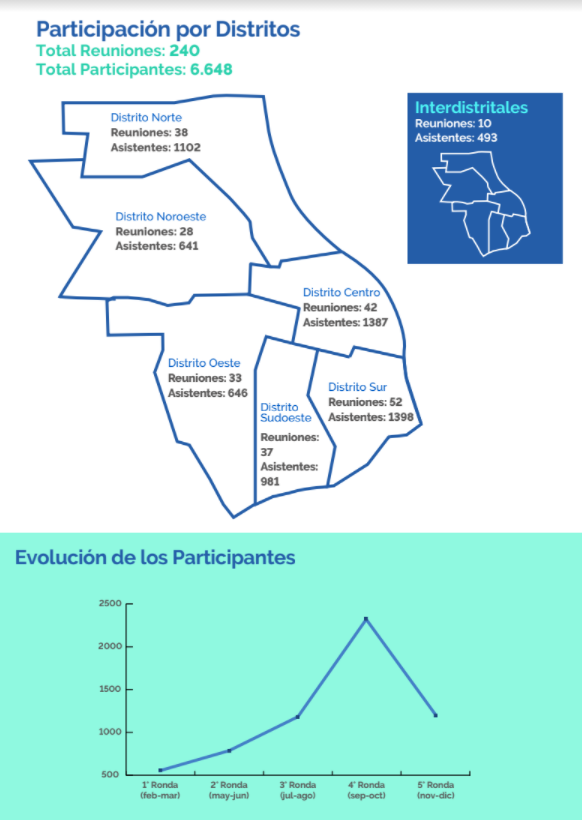
Between February and December 2020, 240 Neighborhood Councils were held. Of that total 204 were through the zoom platform. Due to the advantages offered by this format: not having to move from one point to another in the city, being able to be connected without neglecting home or personal care issues, and the flexibility in schedules since it takes place after the working day, it aroused the interest of neighbors who, when summoned in person, did not attend, or did so intermittently and did not refer to an institution.
During 2020, more than 6,500 neighbors genuinely joined the call made by each district, as well as the inter-district councils. It is also noteworthy that many neighbors, after participating for the first time, returned to participate spontaneously in the following Councils, thus generating a greater closeness between citizens and the State.
In 1995, the city of Rosario began its decentralisation and modernisation process through the Municipal Modernisation and Decentralisation Programme. The main axes consisted in decentralisation (delimitation of the Districts and the implementation of the six Municipal District Centres -CMD-), citizen participation, transparency, quality and efficiency in services and the training of human resources. Within this framework, the Neighbourhood Councils were organized. Those councils are permanent spaces for meetings between the Municipality, neighbours, institutions and the private sector of the city. They meet according to different geographical or thematic criteria.
With the outbreak of the covid-19 pandemic, the Municipality of Rosario, through the Secretariat of Modernisation and Proximity, redesigned its public policy linked to citizen participation to continue guaranteeing links with neighbours even in times of distance and uncertainty. This was achieved by enabling and generating opportunities for meetings through the use of new technologies, adapting the mechanism according to the health situation, thus achieving the participation of sectors of the population that traditionally do not participate much. This was the innovative element of this experience.
The virtual format offers advantages, such as not having to travel from one part of the city to another, being able to stay connected without having to neglect home or personal care issues, and the flexibility of the timetable as it takes place after the working day. Before starting in virtual format, an analysis was carried out with the outreach teams in each District to assess the real possibilities of connection in each territory. In the framework of the subsequent social and compulsory preventive distancing phase, meetings were held with the protocols in force, taking advantage of the facilities of the Municipal District Centres (CMD), health centres and neighbourhood centres to carry out hybrid formats. In addition, a monitoring and evaluation system was developed to record in minutes: the neighbourhood or sector covered by the council, the issues addressed, the main complaints, the age range, the number of participants and their data.
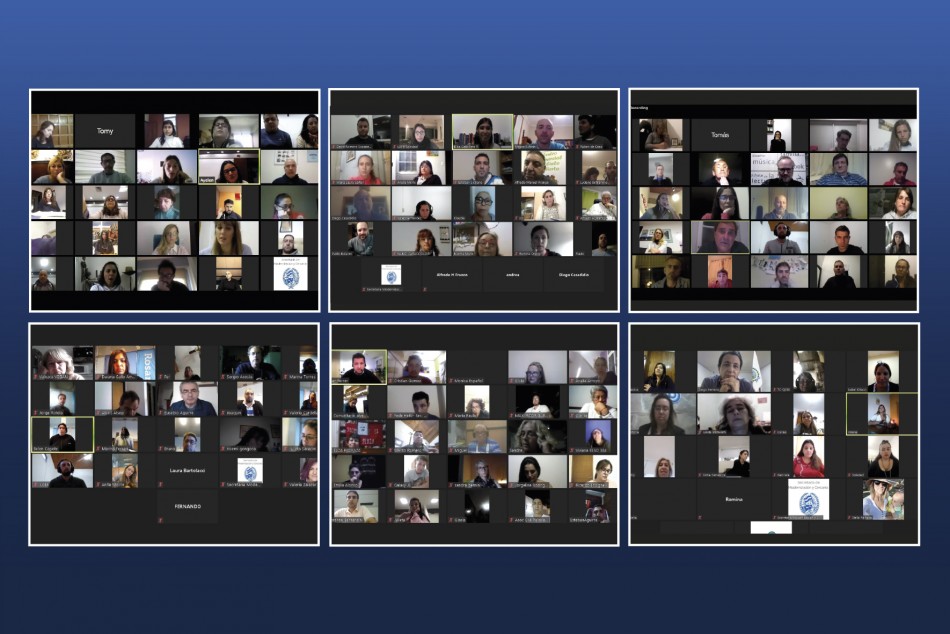
The promotion of effective participatory spaces in the framework of this global health emergency implies actively involving citizens in the debate on issues of public interest as never before, taking advantage of the collective intelligence that has emerged, as expressed in the various manifestations of solidarity and creativity that have arisen. The Virtual Neighbourhood Councils promote the strengthening of unorganised citizenship in a context of pandemic, achieving greater participation of traditionally non-participatory sectors of the population, making use of new technologies and also this proposal contributes to the implementation of the 2030 Agenda for Sustainable Development, especially to the achievement of SDG 16, locating the action in the need to promote citizen participation ensuring that decisions are inclusive, participatory and representative and that they respond to the needs of citizens.
Which is the most innovative aspect of the experience?
The Covid-19 pandemic had an impact on the role of cities and as a consequence, they have taken on an unprecedented protagonism, assuming the challenge of facing the health, social and economic consequences of the Covid-19 pandemic, while strengthening the social fabric through dialogue and coexistence.
In this sense, the Municipality of Rosario, through the Secretariat of Modernization and Proximity redesigned its public policy related to citizen participation, to continue guaranteeing the link with neighbors even in times of distance and uncertainty and this was achieved by enabling and generating instances of meetings through the use of new technologies adapting the device according to the health situation (social networks, Whatsapp groups specially created, mails and personalized phone calls), thus achieving to add the participation of sectors of the population traditionally not very participative, in virtual environments, an innovative element of this experience, Whatsapp groups specially created, e-mails and personalized phone calls), thus achieving the participation of sectors of the population that traditionally do not participate much in virtual environments, an innovative element of this experience.
When the evolution of the pandemic allowed it, hybrid formats -presential and virtual at the same time- were also carried out.
Evaluation
A permanent monitoring and evaluation system was designed based on process, impact, results and participant perception indicators, segmented by age, sex and areas of involvement (proposals/claims). During the development of each Council, information gathering instruments (surveys) were applied, as well as records (minutes) of each meeting to systematize the information and make the proposal more dynamic.
A weekly agenda of Neighborhood Councils was drawn up and publicized within the municipal administration and to the outside world.
The information is systematized in a single database of participating neighbors and a participation map is drawn up to detect in which parts of the city there is greater involvement. Bimonthly and annual follow-up reports are also prepared.
In December, a meeting was organized to socialize the experience called "Territories of Learning. Experiences of Citizen Participation in times of Covid", in which more than a hundred neighbors together with the technical teams of the Municipal District Centers (CMD), made visible the projects developed collaboratively in the six districts of the city, promoting learning in the territory from the exchange and valorization of the experience of virtuality in pandemic, valuing mainly that all the actions that were carried out jointly among the different actors are anchored in the territories, highlighting that all the initiatives arose from collaborative work in virtual environments.
Sources
Nomination File
Rosario Participa website
News about the virtual councils (in Spanish)
Report on the 2020 Neighborhood Councils (in Spanish)
"The experience manages to adapt ICTs to promote unorganised citizen participation at the territorial level, taking into account the conditions in terms of the population's capacities and access to digital tools. It is transferable and feasible. A high degree of coordination with other political and technical actors is not observed, specifically during the holding of the Neighbourhood Councils."







 Join the OIDP